• When I get a late call from my daughter-in-law, my worried grandmother persona takes over as I answer the phone. Joris-voeten-205550-unsplash

    “Hello?” I say, with trepidation.

    “Mary, when you write your screenplay, I want Jennifer Lopez to play me.”

    She is relentless. And she keeps me laughing.

    For the past year she has suggested, cajoled, hounded and harassed me about writing a screen play using the characters who are our family members, and the scenarios that make up our lives.

    It’s not unusual to get phone calls at strange times throughout the week with the latest, “So here’s what happened today.”

    I often respond with, “Are you kidding me??” I really do need to start taking notes.

    What she is asking me to do is tell our story, to write our “once upon a time.”

    The need to share stories is part of human nature, and is documented from earliest times of human existence in ancient cave paintings and engravings from all over the world.

    The stories expressed by our ancient ancestors were meant as an expression of who the artists were, as a people and as individuals. These pictographs say, “This is how we live, this is what we value, these are the things that move us to action and lead us to rest.”

    Whether stories are told through art, the written word, music, dance or some other creative expression, the effect on those who experience them is the same. 

    Neuroscientists and psychologists explain that a compelling story can cause the release of the neurochemical oxytocin in the brain, affecting our beliefs and behavior, while making us feel good, safe and social.

    Today, in our era of extreme marketing, the most effective story-telling is treasured as a means of product branding.  Advertising, including commercials, are mini-stories meant not just to move viewers emotionally, but to move them to action.

    Before marketers, there was Jesus.

    Jesus clearly understood the power of story.  His parables planted the seeds for a faith that would become the largest in the world, even though the message he was trying to impart was often contrary to the status quo of his time. He used parables filled with familiar images and characters to whom listeners could relate.

    Jesus told his stories to help his listeners understand his transformative message and enable them to follow his way to his Father – to love God above all things and to love others.

    We can imagine him sitting around the campfire on a cool night in Galilee, perhaps eating figs, bread and honey, and relaxing after a long day of preaching, when the disciples ask him, “Lord, What is the kingdom of heaven like?” He thinks about it for a minute and then replies, “Once upon a time, there was a mustard seed. It was the tiniest of seeds that God ever created. But one day, a man planted the tiny mustard seed in the soil and it grew into the greatest of shrubs and became a great tree, so that the birds of the air could take shelter in its branches and make nests in its shade.”

    Of course, Jesus didn’t use the words, “Once upon a time,” but he did speak of something all the disciples would know – the ordinary mustard seed. Jesus used this familiar image to help his disciples, and us, see things in a new, richer light.

    His stories were meant to nurture “Aha” moments and to deepen understanding of challenging spiritual and moral principles. He was able to foster this learning in his disciples because he was brilliant at knowing his audience. He understood that not all people are at the same level of faith, maturity or intellect.

    Today, our young people are being inundated with stories daily, many of which are not in their best interest spiritually, morally or emotionally, but which can have a profound effect on their way of thinking and behaving. We need to counteract those stories with stories of our own, stories of love, forgiveness, hope and resurrection – stories of our Catholic faith.

    “Once upon a time, there was a man lying hurt at the side of the road …”

    Photo by Joris Voeten on Unsplash

  • Many years ago, when I thought I would be boiling and coloring eggs and planning a dinner for my large family, I ended up spending the week Laura-thonne-403927-unsplash
    before Easter in the hospital with my youngest son. It was certainly unexpected, but life doesn’t ask you if you’re prepared before it throws the unexpected your way.

    After rushing a very ill 18 year old to the emergency room, we spent the next eight hours waiting for a room, with nothing to do except observe what was happening around us.

    Being present in an emergency room places a person in close proximity to the vulnerability of others. Here, amid the woundedness, amid the relationship of sufferers and caregivers, are powerful lessons to be learned. Just observing how each person dealt differently with suffering was an education for me.

    There was the young woman, hysterical and in great pain, who was inconsolable until her husband arrived. His presence calmed her immediately.

    Then there was a middle aged man, involved in a car accident, who repeatedly entered into verbal warfare with a person in the room, attempting to place the blame for his injuries on someone else, as if that would make him hurt less. He made care-giving difficult.

    But the patient who touched me the most was a little old lady, obviously suffering from some form of dementia as well as physical problems, whose repeated outbursts had the tone of a raspy voiced boxer. Time after time, throughout the course of a very long day, she called out to children who were not there, “Carol, I need my puffer!!”

    “Carol, are you listening to me??”

    “Carol, you’re killing me here!!”

    Obviously this little lady realized she was totally dependent on others and had no choice except to surrender to their care, but she seemed to also know that surrender didn’t mean giving up the fight.

    In fact, after one especially loud round of outbursts, a very wise nurse was heard to say, “She’s a contendah!!”

    And that she was. Still, every once in a while this suffering woman with the cartoon character voice would lose her feistiness and plead with an absent son: “Help me, please, please, please!”

    It was at those times that her anger would give way to the vulnerability that is manifest when a person acknowledges their needs. This is the time when true strength rises in the heart of a person; a time when we are strong enough to be humble.

    In the absence of her family, this aging woman was comforted, attended to and cared for by a wonderful staff of compassionates nurses. They spoke to her in gentle tones, encouraged her to tell her stories, rubbed her arms and legs with lotion, made her laugh.

    It was a beautiful thing to see her smile, especially in the midst of her pain. It was a miracle. Not the supernatural kind, but the kind that arises from love, from letting go of self long enough to embrace another in their hour of need.

    A lesson was confirmed for me during that very long night in the emergency room, and a longer week in the hospital: the surest way though pain is with love – whether it is the self-giving of family or friends, the compassionate presence of a priest or rabbi, chaplain or minister, or the exceptional care of nurses and doctors who choose to make a person feel as if they really do matter.

    A wise bishop once told me that Easter was the greatest love story ever told. For Christians, it truly is. But for each of us, no matter our religious tradition, or if we have none, any day is a good time  to walk with another person through their suffering and see our love give rise to the amazing grace of resurrection in another’s life.

    Love is a miracle in and of itself. Giving it loosens our grip on the attachments that weigh us down. Receiving it reminds us that we are enough as we are, in this present moment, and that’s all that matters.

     Thoughts to Ponder

    “Miracles occur naturally as expressions of love. The real miracle is the love that inspires them. In this sense everything that comes from love is a miracle.” ~ Marianne Williamson

    “Being deeply loved by someone gives you strength, while loving someone deeply gives you courage.” ~ Lao Tzu

    Laura Thonne photo on Unsplash.

  • Otis Redding sang about it – some "girls they do get weary.  They have their grief and cares."                                                                                                                                                           Cris-saur-122006-unsplash

    Today, I'll admit it. I'm one of those girls. I’m weary … a bone-tired, overwhelming exhaustion that doesn’t get better with a cup of coffee, a walk in the fresh air or a break on the couch.

    Today I want to stop thinking, and writing, and worrying, and planning. I don’t want to open mail, reply to messages or answer the phone.  I simply want to rest, to be alone and to breathe deeply and freely.

    There are times like today when I am unfocused, cranky, and struggling to write, and I have to acknowledge the emotional and mental fatigue that is plaguing my spirit and my body, because if I don’t acknowledge it, I can’t overcome it.

    I am not alone. Most of us have experienced this kind of fatigue at some point, or maybe many points, in our lives.  What experience has taught me is that we often feel guilty about our need to rest from the frantic pace we live, and we deny ourselves the one thing we need most – self-care. In resting we feel embarrassingly unproductive, having lost sight of the fact that rest is among the most productive of states.

    We only need look at the example of Jesus. He knew what it was like to be bone-weary, exhausted, spent, done for the night and maybe the next day. When we come to him in our weariness, he is not going to give us a sermon about pushing through for God. He’s going to remind us of what he told the Apostles when they returned from the mission Jesus had sent them on, two by two: “Come away by yourselves to a desolate place and rest a while.”

    Jesus knew the value of such rest because he had entered into it many times on his journey.

    The Apostle John tells of Jesus’ arrival in “a town of Samaria called Sychar, near the plot of land that Jacob had given to his son Joseph. Jacob’s well was there. Jesus, tired from his journey, sat down there at the well. It was about noon.”

    Noon was a time when few people came to the well because of the heat, and the disciples were off getting supplies. Jesus had some time to be alone and rest, before encountering the Samaritan woman and giving us all an opportunity to drink of Living Waters.

    Matthew tells us when Jesus heard that his cousin, John the Baptist, had been beheaded, “he withdrew in a boat to a deserted place by himself.”  Jesus knew that grief and anger can be debilitating if we don’t give ourselves time to process it.

    For Jesus, such time away was all the more necessary because of the great demands on him because of his love for the people. Matthew continues, “The crowds heard of this and followed him on foot from their towns. When he disembarked and saw the vast crowd, his heart was moved with pity for them, and he cured their sick.”

    Jesus instinctively knew that in order to live our mission in the world, we must engage in self-care, which for many of us means rest and time alone to refocus on our path. He continues to teach us that we are, as Father Henri Nouwen describes,  “unique stones in the mosaic of human existence – priceless and irreplaceable.”

    We have a mission to fulfill, a passion put in our hearts by God, but we can’t fulfill it if we are burned out.

    So, after going away by myself and getting some rest, I embarked on writing this column, because when the Samaritan woman needed a drink of living water, Jesus didn’t’ say, “Not now, I’m exhausted.”

    Cris Saur photo on Unsplash

  • On a recent trip home from North Carolina, I picked up a small gift for family members who were dog sitting for the week. The small black and tan James-barker-560319-unsplashplaque read: “Money can buy you a fine dog, but only love will make the tail wag.”

    It was perfect for them, because they love our dog, and our dog knows it. Like a sullen child being dragged home after a weekend at her grandparents’ house, our dog is obviously missing the attention she received while we were away – the long walks, free-time for ecstatic runs in a fenced-off area, new toys and new humans to play with her.  Back home, she seems to be wandering around the house looking for them, and her tail is not wagging as much as usual.

    While I was wrapping this small thank-you gift, I was reminded of an exchange I had with my six-year old granddaughter just a day earlier as she was buckling herself in to her car seat before our drive to school.

    I was checking to make sure all the buckles were secure and she was looking directly in my face and rubbing her fingers up and down my arm.

    “You are the best abuela ever,” she said.  I chuckled to myself, thinking of all the times during the past week when I had corrected her or yelled at her for something. I asked her, “Why?”

    “Because you love me so much,” she said simply.

    I touched her cheek and kissed her outstretched hand and assured her she was absolutely right.

    As we drove to school, she spent the ride singing a song about the seashells she had collected on the beach, and I reflected on how this child of six had come to the very certain conclusion that I loved her more than anybody else loved her, except, she had clarified, “mommy and daddy.”

    How do children learn at such a young age what love looks like, what love does? Is it possible for them because they have not yet become jaded, or added the “ifs, buts, and should haves,” as addendums to their experiences of love?

    We underestimate children, their powers of observation, their deep spirituality, their ability to grasp profound concepts, their own innate ability to love deeply.

    If you ask a very young child what love is, their responses are enlightening – a favorite stuffed animal, a heart, the sun – but a year or two later their insights become more powerful: "When my grandmother got arthritis, she couldn't bend over and paint her toenails anymore. So my grandfather does it for her all the time, even when his hands got arthritis too. That's love."

    One of my favorite authors and TV personalities, Leo Buscaglia, once shared a story about a contest he was asked to judge to find the most caring child. As the story goes, a four-year-old child had a next door neighbor who was an elderly gentleman who had recently lost his wife. Upon seeing the man cry, the little boy went into the old gentleman's' yard, climbed onto his lap, and just sat there. When his mother asked him what he had said to the neighbor, the little boy just said, “Nothing, I just helped him cry.”

    Before his death in 1988, Dr. Buscaglia wrote 15 books about love, five of which were once on the New York Times best-seller list at the same time. I discovered only recently that Dr. Buscaglia’s passion for sharing love with the world stemmed from a tragedy.

    While a university professor, one of Dr. Buscaglia’s students committed suicide. Distraught over the loss, Dr. Buscaglia began teaching an unofficial, noncredit course on life that he called Love 1. More than 600 students signed up for this course, when only 50 were expected.

    We have a responsibility to children, not to be perfect but to be present, to teach them to live a life that will likely be both full of joy and full of pain, to make sure that if someone asks them, “What is love?,” they will know how to answer.

    "Love is what's in the room with you at Christmas if you stop opening presents and listen." ~ Bobby, age 7

    James Barker photo on Unsplash

  • Nothing brings with it more opportunities for joy, and the unexpected, than spending time with your grandchild.                                                         Annie-spratt-54462-unsplash

    On Easter morning, my five-year-old granddaughter brought me a toy that was not working. She asked me to change the batteries, but we needed a special screwdriver and not one of her uncles knew where this magical tool might be.

    I smiled at her and told her I just happened to have the very thing we needed.  Then I opened the closet door and pulled out a small pack of miniature screw drivers. Her eyes widened in surprise that I was able to deliver the goods.

    “I’m amazing, aren’t I?” I laughed, and in all seriousness she looked up at me, shaking her head yes, and said, “I wish you would never die. I wish you were like Jesus so you could be my abuela forever.”

    I could have used the moment for catechetical instruction, but I believed my hug around her little shoulders and my promise to be her abuela forever, even after I was gone, was lesson enough at the time.

    This was the third time in as many days that she had mentioned she didn’t want me to die. It brought back memories of my fourth son who, at a similar age, laid down on the couch for no apparent reason and began to cry.

    I asked him several times what was wrong before he eventually blurted out, “I don’t want you to die!”

    What prompted his thoughts about my death remains a mystery, but psychologists report that children begin to come to grips with the concept of death between the ages of four to eight.

    Of course, every child learns in their own time, but at some point they begin to understand the permanence and inevitability of death; that, contrary to what they see in cartoons or movies, those who have died do not come back to life. They will begin to grasp that people die from physical causes and that, upon death, the human body no longer functions.

    Psychologists also stress that children must be given the opportunity, through simple and direct explanation of the natural cycle of life, to fully understand these concepts, and it is the children who often inspire these conversations through their own questions and comments. Fred Rogers, from Mr. Rogers’ Neighborhood, believed that death should be talked about with children. He faced the subject on his show, talking about the death of a fallen bird, his gold fish, and his beloved dog.

    Rogers wrote, “Just being close to our children and being willing to listen to their concerns about death – or anything else – allows them to know that they can mention difficult things to us and we’ll respect their ‘wonderings’ and be as honest and helpful as we know how.”

    Being close to our children also allows us to share how our faith in God and our love of Jesus enables us to be sad in the face of death and hopeful at the same time. By sharing our feelings, we encourage children to share their own; by sharing the power of faith in our lives, and our own limited understanding of ourselves as both mortal body and immortal souls, we open the doors to children’s questions and encourage their own learning process.

    On the website of the Orthodox Church of America, Dr. Albert Rossi and Father John Schimchick wrote, “In moments of death impacting a child, the adult will feel inept and without the ‘right words.’ These are special, grace filled moments precisely because the adult is keenly aware of human inadequacy. Enter God. This is a ‘moment of opportunity’ for the adult to turn to God, beg for help, and rely upon his infinitely wise guidance.”

    To read more, go to oca.org and search under family life for “Talking to Children About Death.” Also visit fredrogers.org, an article about helping children, entitled “Dealing with Death.”

    Mary Morrell is the former managing editor of The Monitor and an award-winning writer, editor and educator working at Wellspring Communications.  She can be reached at mary.wellspring@yahoo.com, and read at her blog, “God Talk and Tea.”

    Annie Sprat photo on Unsplash

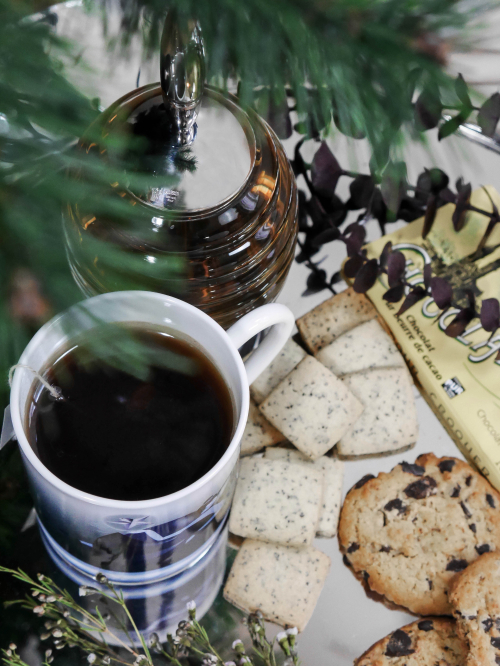
  • For many of us, tea is the start of a moment of comfort, a chance to unwind, regroup, slow down, physically and mentally. Sometimes, when the Clem-around-the-corner-486749-unsplashoccasion is right, a "little something," to go with that tea brightens the moment.

    For my mom it was soda crackers, round thick creations with almost no sugar, that you wouldn't eat dry but dunked in tea were a delightful treat.

    For one of my friends, it's scones, for another, ginger snaps.

    Personally, I'm fond of chocolate graham crackers, but when the prospect arose of having a group a friends over for tea I decided to branch out into something more adventurous.

    Recently, my husband brought home a piece of bread pudding a friend had made for a get-together and it was wonderful. Then, when the diner we frequent offered bread pudding as a choice of desserts, and my husband raved about it,  I started to think I should check into making this dessert.

    I’m a late-comer to the deliciousness of bread pudding, which has an ancient history in a variety of cultures, and was often favored as a means to prevent wasting left-over bread. In my home, with six sons, I guess we rarely had any bread left over, so the idea of bread pudding never occurred to me.

    Now, I am amazed at the myriad recipes for this enjoyable dish.

    What I discovered in searching for a recipe was that they all use the same, or similar ingredients, but in varying quantities. Some recipes using 6 slices of bread call for 4 eggs, which I used, but others called for 2 eggs.  The quantities of milk and sugar also changed, even when the amount of bread stayed the same, so I’ve decided that trial and error and developing a recipe that works for my taste is the way to go.

    I’m posting the recipe I decided to use, adapted from a variety of others that I discovered.  Since I am just starting this pudding adventure I am planning to try a variety of breads, including challah, which seems to get rave reviews. 

    More adventurous cooks, or just those interested in the history of bread pudding, may like to check out this article, “A New Story With Old Bread,” which includes a recipe using coffee porter aged in bourbon and rye whiskey oak casks.

    With my recipe, several issues arose that I didn’t expect: the pudding was still very much liquid at the 45 minute mark of baking so I left it in another 20 minutes.  There is often a need to adjust baking time to your unique oven. I also think part of the problem was my choice of bread and the fact that it wasn’t dry enough, which, from what I've read, is also the reason why my beautifully risen creation took a dramatic fall when I removed it from the oven. It seems it has to do with bread moisture levels, though some falling is expected. There’s an interesting article on the problem here.

    I used a buttermilk bread which, while well past the freshness date, had been kept in the refrigerator. It was a heavy bread and still moist, a situation that apparently prevents the bread from soaking up enough of the milk and egg mixture and leads to excessive fall, like a poorly cooked soufflé!

    The solution to using fresh or moist bread, according to more experienced bread pudding cooks, is to cube the bread and bake it in the oven for 8-10 minutes at 300 degrees before using it in the recipe. This removes excess moisture.

    In spite of the fall, the pudding was delicious, and worked well paired with whipped cream or a small scoop of ice cream.  The next time, I am going to experiment with less sugar and using brown sugar instead of white, and maybe adding some sliced apples or canned peaches.

    Of course, my accompaniment of choice is a cup of strong black tea, which for me is English breakfast tea, which I find is great as an afternoon pick me up and is stronger than most of the common packaged black tea bags. 

    So what do I drink for breakfast? Irish breakfast tea. It is generally stronger than English breakfast tea. Check out this article for an introduction to the differences between Irish, English and Scottish tea.

    Enjoy your comfort moments!


    FIRST-TIME BREAD PUDDING                                                                                                                                                                                                         Bread-pudding-2-620

    6 slices dry (stale) bread of any kind

    4 eggs

    2 cups milk

    ½ cup sugar (I think this could be reduced for those who prefer less sweet)

    1 tsp. cinnamon

    ½ tsp. nutmeg

    1 tsp. vanilla

    2 tbs. melted butter

    Optional

    ½ cup raisins (or other dried fruit)

    ½ cup chocolate chips

                ~ ~

    1. Lightly butter an 8 X 8 baking dish.
    2. Cube bread (if it is not stale, place on baking sheet in 300 degree oven for 8-10 minutes) and arrange in the dish distributing evenly. Sprinkle on any optional ingredients, like raisins.
    3. In a medium mixing bowl, whisk together eggs, sugar, milk, cinnamon, nutmeg, vanilla and butter.
    4. Pour the mixture evenly over the bread in the baking dish. Make sure all the bread is well-coated, pressing bread down into liquid if necessary.
    5. Pre-heat oven to 350 degrees.
    6. While the oven is heating, let the bread mixture sit for 10-15 minutes to ensure the bread has absorbed the liquid. Cover lightly with aluminum foil, which will stay on for most of baking.
    7. When oven is ready, place the bread pudding on the middle rack and bake for 45-50 minutes or until the top is set. Remove foil for last 10 minutes to brown the top.
    8. Remove from the oven and allow to cool slightly. This may be served warm, or cold, depending on preference, alone or with topping of your choice.
    9. ENJOY.

    In gratitude ~ "For each new morning with its light, for rest and shelter of the night, for health and food, for love and friends, for everything Thy goodness sends." ~Ralph Waldo Emerson

    Top photo by Clem Around the Corner.

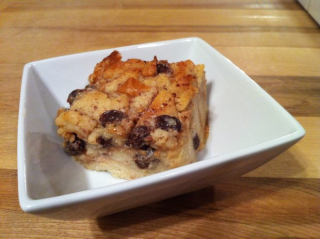
    Bread pudding photo borrowed from Vintage Cooking on Google Images.

  • I love tea. I grew up with tea, for breakfast, a between meal treat, an after dinner relaxer, and, of course, whenever we had company. Jason-leung-603402-unsplash

    Tea is a fixer, especially when things get a little out of hand – like the day, many years ago when my cousin invited a girl from school to hang out with us at my cousins' house. We didn’t know this girl very well, or that she had some “issues” which made her very high strung. What should have been a fun afternoon turned into a rowdy episode that spilled out on the front lawn.

    Our attempts to get things under control were to no avail, so I leapt to my feet and yelled, “Wait! I’ll go make some tea!”

    A few minutes later my cousin came in the front door, slamming it behind her and said, “Tea? You left me out there with that crazy girl to make tea?”

    “Well,” I pointed out, “she went home didn’t she?”

    A typically British (or Irish) reaction, I would learn as I got older.

    As one character in the well-loved British TV series, Midsomer Murders, said, “There's only one way to deal with other people's unpleasantness. Plenty of hot tea.”

    Maybe my love of tea is one of the reasons I’m drawn to British mystery and detective shows. Only in Britain would the tea kettle go on every time the police show up at someone’s home to ask questions of potential suspects.

    Ever wonder why Brits are so obsessed with tea? Check out this delightful video … after you’ve made yourself a delicious cup of tea, of course.

    You might need it to read this great article on the decline of tea in Britain (really!), the rise of coffee and the influence of youth on the deteriorating tradition … oh, and the quickly rising interest in tea in the US.

    In the midst of all this change, and the absolutely dreary state of affairs usually revealed on the morning news, remember the wisdom of Terri Guillemets: "A crisis pauses during tea."

  • Several years ago, while visiting my son at the Renaissance Faire in Tuxedo, N.Y.,  he asked me to help an injured dragonfly that was sitting on the counter in the pub where my son was Dragonfly2working.  I cupped the dragonfly in my hands and held it there for an hour or more while I decided what to do with it. I wasn't sure how it was injured or if it had just gotten into the mead! 

    Finally, I realized there was a pond nearby and, while it was roped off, I was able to lean in enough to place the dragonfly in safety inside a bush near the water. I said a little prayer for it as one of God's amazing creatures and went back to enjoying the Faire with my husband.

    Later that evening, after arriving home in N.J., another son called me to come out on the front porch. "You are not going to believe this," he yelled. I went out to join him and was stunned to see hundreds of dragonflies hovering over our lawn. We have lived here for almost 40 years and I've only seen a dragonfly once. I was speechless.

    "They came to thank you," my husband said, laughing. I liked that explanation.  

    A moment later they were gone, and I thanked God for the unexpected, memorable display of beauty.

    A note of interest for those who love dragonflies or find them showing up in their lives — The dragonfly, in almost every part of the world, symbolizes change, transformation, a deeper self-realization, a depth of character, potential, power and poise.

    Jodi Bergsma image found on Pinterest


  • As the weather grows warmer and we are able to spend more time on our backyard deck, it never fails to call to mind an image I have of my dad and Sabine-van-straaten-345853-unsplash one of my sons, a white-haired, blue-eyed handful of a child, perhaps four-years old at the time.

    I looked out the glass of the sliding door in my dad’s kitchen to see them both, sitting in their respective lawn chairs on the patio, my dad with his customary “one can of beer on a hot summer day,” and my son with “one can of soda snuck out of the refrigerator by poppy.”

    They sat next to each other without speaking a word, looking over the newly mowed lawn and my father’s many flowers with the satisfaction of lords looking over their manor.

    My dad was the kind of man who made even the simplest of moments memorable and rich, especially for his grandsons who treasured long walks with him and an endless collection of rocks, coins, pine cones and paraphernalia gathered as they journeyed.

    They fought over who would be next to play checkers with Poppy, who would stand next to him in church and wait for the surprise moment when he would press their unsuspecting fingers against the pew and chuckle under his breath, or who would be on his team for croquet. But most of all, I think, they loved when he would crack their toes.

    I wish my grandchildren could have known him.

    There is no doubt in my mind. God created grandparents to teach the rest of us how to be stewards.

    Grandparents are those people who always have the time – no matter how busy they really are. They just seem to know that the most important way to use their time is to give it away to someone else. For them, the recipients are their grandchildren.

    Grandparents are those people who can do anything, fix anything, know everything, and if they don’t know they will find out. In the eyes of their grandchildren they are among the most talented of God’s creatures.

    Grandparents are those people who know, without a doubt, where their treasure lies – in the faces of little munchkins covered with peanut butter and jelly, or the wily teenager who knows just the right thing to say to wrangle a few dollars from a generous soul.

    When parents are busy with the practical, grandparents give the precious – sharing stories, telling jokes, buying ice cream, playing games and giving hugs.

    There is no mountain grandparents wouldn’t move, no river they wouldn’t cross, no cartoon they wouldn’t watch if it would make life happier, healthier or better for the children who add reason to their being.

    In our house, being a grandfather means taking time from real work plans and loading up the van with make-believe materials and driving to a make-believe job site while your young grandsons (aka bosses) give you your amazingly well-thought out work instructions.

    Being a grandmother means pulling the plug on my writing to take dictation from a five-year-old budding author who is writing her newest mini-book about the horrid, evil grandparents who move in to take care of two young sisters (“It’s only a story, Abuela, it’s make believe,” she assures me) or making noodles – again – for my three-year-old epicure who loves just the right amount of butter and cheese.

    Alex Haley, the American writer and author of the 1976 book “Roots: The Saga of an American Family,” said it beautifully: “Nobody can do for little children what grandparents do. Grandparents sort of sprinkle stardust over the lives of little children.”

    Stardust that will, hopefully, shine in their memories for years to come and remind them of just how special they really are and how much they are cherished.

    For there is no doubt in my mind that God made grandparents to teach us how to love.

     “On the seventh day God rested. His grandchildren must have been out of town.”  ~Gene Perret

    Photo by Sabine van Straaten on Unsplash 

    Related articles

    Important Lessons My Mother Taught Me
    A small thank-you can make a big difference!
    Never underestimate the power of thank you
    Choices of the heart: Putting others first is the blessing of faith
  • My husband loves TV Westerns. After a long day working he winds down with a series of old favorites: Wagon Train, The Rifleman, Gunsmoke, or his Priscilla-du-preez-181395-unsplash favorite, The Virginian.

    If you ask him why he enjoys this genre he will tell you it’s because there is an actual story line told with no special effects, the characters are ordinary people, with obvious weaknesses and foibles but, at least the good guys, with strong personal values. He sees in them the values of hard work, determination, integrity, and justice.

    After watching hours of Westerns with him, I have learned there are inevitably gems of wisdom in every show that are worth writing down. Often they slip out of the mouth of the least likely person.

    One of my favorites is from Festus, the scruffy deputy on Gunsmoke, who offered in his twangy, rural drawl, “He’s so nearsighted he can’t see past the brim of his own hat!”

    Haven’t we all been there at one time or another? Nearsighted, shortsighted, our vision limited by our inability, or our refusal, to dive deeply into our own hearts and uncover who we really are. Sometimes we are unaware of our need for self-reflection. Other times, we have a sense that unless we look inside and empty all that is not of God, we will fall short of who God meant us to be.

    Often, it’s the doing that’s the most challenging. Our contemporary lifestyle doesn’t leave much time for self-reflection or solitude. Even when we are able to carve out moments of time for reflection, our attempts at introspection often bear little fruit. But, how are we to continue to grow and move forward, spiritually or emotionally, if we don’t discover and acknowledge the obstacles in our path?

    I have found that my efforts to know myself are more productive when I invite God into the process.

    This moment of realization came when singing a beautiful hymn with the parish choir: “O God, you search me and you know me. All my thoughts lie open to your gaze. When I walk or lie down you are before me: Ever the maker and keeper of my days.”

    How many times had I sung this hymn before? I thought it was lovely, but it never struck me the way it did during a time when I was struggling with understanding what was going on in my life.

    The hymn is based on Psalm 139, a psalm of David who loved God entirely and for whom nothing was more important than a relationship with God.  In spite of David’s transgressions, his desire was always to be connected to God. 

    In the psalms we hear David proclaim his accomplishments as God’s accomplishments, and his sins as the times when he forgot God’s ways, responding always with humility and repentance.  In the psalms, said one writer, we can see “the beauty of [David’s] soul.”

    When David invited God into the process of introspection, he was asking his Creator, the one who already knew everything about him, to reveal the truths that David needed to know about himself. David acknowledges, “Such knowledge is too wonderful for me, far too lofty for me to reach.”

    Self-knowledge, achieved, like David, through a reliance on God’s revelation, is a special kind of wisdom. It is a wisdom based in truth.  As the Kotzker Rebbe taught, “A person often believes something about himself that is not true. Undeceive yourself. Know who you really are.”

    For us, as Christians, our self-knowledge begins with opening ourselves to God, but it must result in action. We are called to move forward in hope and joy, with trust in God’s grace, and with courage in spite of the dark places in our lives, to be servants in the world.

    “The most important thing that can happen to a person is to encounter Jesus,” Pope Francis has said, stressing that, in addition to the Gospel and the Sacraments, “we meet Jesus in our loving service to those in need, those who live on the periphery of society.”

    “Examine yourselves, to see whether you are in the faith. Test yourselves. Or do you not realize this about yourselves, that Jesus Christ is in you? …" 2 Corinthians 13:5

    Priscilla du Preez photo on Unsplash