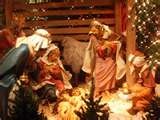
Last weekend, in a rare episode of cleaning frenzy, I came across a box that never made it Last weekend, in a rare episode of cleaning frenzy, I came across a box that never made it  back to the attic after the Christmas season last year — the Nativity. It brought to mind the unfortunate truth that Christmas is also the season of court battles over separation of Church and state, and the nativity scene, as symbolic of Christ’s birth, is often at the center of the battle. back to the attic after the Christmas season last year — the Nativity. It brought to mind the unfortunate truth that Christmas is also the season of court battles over separation of Church and state, and the nativity scene, as symbolic of Christ’s birth, is often at the center of the battle.
Tradition tells us that the second century Roman Emperor Hadrian, in an attempt to stem the tide of Christianity, established a pagan temple upon the site of Christ’s birth. It seems the Emperor was well aware of the power of Christ’s birthplace to promote devotion to the faith tradition that would rise up in the Savior’s name. Today it is with a heavy heart that many Catholics will acknowledge the obvious – the Hadrians of the world are still at it. The on-going prejudice against Christianity becomes routinely evident every Christmas as Christian symbols of the birth of Christ – the REASON for the celebration of CHRISTMAS – are banned from every public arena. It would seem, as a group, we are part of the problem because our worship and devotion is so often lukewarm, and because we have mistakenly bought into the novelty of the season as promoted by merchandisers and marketers. Perhaps it would be inspiring for us, as Catholics, to read again the story of St. Francis and the crèche as written by St. Bonaventure: “It happened in the third year before his death, that in order to excite the inhabitants of Grecio to commemorate the nativity of the Infant Jesus with great devotion, [St. Francis] determined to keep it with all possible solemnity; and lest he should be accused of lightness or novelty, he asked and obtained the permission of the sovereign Pontiff. Then he prepared a manger, and brought hay, and an ox and an ass to the place appointed. The brethren were summoned, the people ran together, the forest resounded with their voices, and that venerable night was made glorious by many and brilliant lights and sonorous psalms of praise. The man of God [St. Francis] stood before the manger, full of devotion and piety, bathed in tears and radiant with joy; the Holy Gospel was chanted by Francis, the Levite of Christ. Then he preached to the people around the nativity of the poor King; and being unable to utter his name for the tenderness of his love, he called him the Babe of Bethlehem.” It is always the time for Catholics to take on the attitude of St. Francis who created the But perhaps now is the time for Catholics to come together with a visible expression of their uncommon love for Christ and the Holy Family by putting a manger in public view on their own property to express devotion to our God and our faith. Bring the Babe of Bethlehem home this Christmas — to your hearth and your heart! “Take time to be aware that in the very midst of our busy preparations for the celebration of Christ’s birth in ancient Bethlehem, Christ is reborn in the Bethlehems of our homes and daily lives. Take time, slow down, be still, be awake to the Divine Mystery that looks so common and so ordinary yet is wondrously present.” Edward Hays
|

Sharing insights and inspiration that happen over a cup of tea
-
-
The prominent front page headline of the The Star Ledger read: NO REMORSE, JUST
 BRAVADO. A steely faced young man stared up at me, the words of his callous phone texts following the brutal beating of a husband and father captioned near his mouth. As I read the account of the savage, fatal attack on a man out for a walk with his wife and two children, I felt physically ill. It’s not the first time young people have perpetrated such horrific violence, but for some reason the lack of remorse evidenced by these five young men, four of whom were not yet 18, sickened me. I could only wonder what so many have wondered before me: What leads our children to such hate and violence?
Since then, the words of Graham Nash’s popular song have been playing in my head: “You who are on the road must have a code that you can live by, and so become yourself because the past is just a good bye. Teach your children well …”
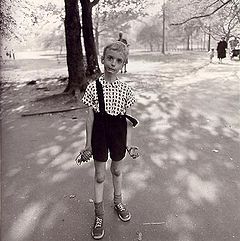
In a 2009 National Public Radio interview, Nash recounted that the inspiration for this 1968 song came from a famous photograph entitled, “Child with Toy Hand Grenade in Central Park, New York City.” The image, snapped in 1962 by famed US photographer Diane Arbus, served as the impetus for Nash to reflect on the impact of violent messages given to children.
It is a reality that continues to warrant reflection today as we approach 2011.
(The full column will appear later this month in The Catholic Spirit newspaper and will be posted in its entirety after that. In the meantime, you may want to follow Gov. Arnold Schwarzenegger v. Entertainment Merchants Association. It's an interesting issue.)
-
Many years ago I tasted a chocolate brownie with layered mint frosting that was outstanding! I asked
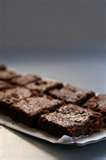 for the recipe but found that the number of steps needed to create the mint layer was more time consuming than I liked. So….what to do?
I cheated! I baked my favorite boxed brownies and then placed Andes Mints across the top of the warm brownies. As they melted, I spread them like frosting. When the brownies cooled the candy became a hard mint chocolate shell on top of the brownies. Pretty awesome for something so fast and easy!
Of course, they probably wouldn’t pass muster for the bake from scratch team, and I’d prefer real homemade myself, but for brownies with a little twist when you don’t have time to bake from scratch, these are mighty good.
-
Spending a good deal of the summer with my friend Rose means spending a good deal of time at
 garage sales! On one of our early morning outings, I was intrigued with a small rubber stamp buried under books in the bottom of a cardboard box. It bore the image of a sailboat and the words: “Ships are safe in harbor, but that’s not what ships are made for.”
I thought a lot about those words later in the month as I watched boat owners scramble to moor their boats in the harbor because of an impending storm, and again, as I sat in a small wooden church, huddled with other parishioners as the storm whipped around the 150 year old structure.
At that moment the church was our safe harbor, a port in the storm, but when the pastor said, “Go in peace to love and serve the Lord,” it was a reminder that we were meant to go into the world to be Christ to others, not stay at home in the harbor where it is safe.
Still, it is comforting to know that when our spiritual supplies are low, when we need “repairs” or a place of calm and rest, we can find, through the parish, sustenance in the reception of Eucharist, God’s Grace in the sacraments and a family of believers ready to welcome us home before we begin our journey again.
-
Where I come from, in upstate New York, autumn was not a season that stealthily caught you off
 guard. There, in the bosom of the Heldebergs, autumn “arrived,” in full phantasmagoric color, in crisp apple-picking days and dimly lit supper times. It held me captive, but I never knew why. Even now, as autumn approaches, I find myself stirred by vague memories of long walks home from school under a harvest moon, the smell of fall air and the delightful treat of caramel apples. Now that I am older and a little wiser, I realize that on a deeper level there is meaning in the purpose of fall itself; in the season that signals a moving into winter.
For me there was, and still is, comfort in the latency, that period of time when growth is stilled. After the last harvests of fall, the created world begins its journey inward, when the growth of spring and the fulfillment of summer comes to a halt and life begins a period of rest and renewal.
Contemporary author Denis Waitley reminds us that autumn is the season “for enjoying the fullness of life—partaking of the harvest, sharing the harvest with others, and reinvesting and saving portions of the harvest for yet another season of growth."
Certainly, there is an essential quality to the experience of growth. God has deemed it necessary in all areas of human existence. Think of Jesus, who, as Scripture teaches, grew in wisdom and grace. There was no “Cecil B. DeMille” moment of revelation, with trumpets blaring and lights flashing, where Jesus became aware of all things from all times. Neither are we born with a full spectrum of knowledge, nor does any flower erupt from the earth in full bloom, at once whole and complete.
But growth for the person can be the most painful of experiences, often stemming from great trials of loss and doubt. When the trials are many and the pain becomes overwhelming, we are often encouraged to find ways to flee from the experiences, and with the escape, avoid growth. How blessed we are that nature needs no such escape route.
Surely, God created all things not only for our enjoyment and benefit, but also to instruct us. Nature teaches that periods of stillness, of turning inward, are necessary and fruitful for all of God’s creation, most especially God’s children.
Perhaps that is why God created autumn to be so beautiful; to encourage us to lose ourselves in the stillness for awhile in order to prepare for our next season of growth.
“We are not born all at once, but by bits. The body first, and the spirit later; and the birth and growth of the spirit, in those who are attentive to their own inner life, are slow and exceedingly painful. Our mothers are racked with the pains of our physical birth; we ourselves suffer the longer pains of our spiritual growth.” Mary Antin
-
Having recently observed a very contentious exchange between a customer and waitress in my
 local diner, fueled with great pleasure and precision by the customer, I have to wonder why people feel that being loud, abusive and rude is something of which to be proud. This woman not only seemed to feel it was acceptable but gloated that she had put another person in her place in front of a room full of patrons while hurling every profanity in the book. She didn’t seem to realize that the only person who looked like a fool was her, especially as she was scooping mashed potatoes off her plate with her hands and slamming them down on another plate to make a point. Seemed like she had been mentored by some of the latest TV “housewives!”
I thought of her today when I came upon a book entitled, “Living Like You Belong to God.” Remembering where we come from, and to whom we belong, goes a long way in nurturing decisions and behavior that reflect our noble origins, instead of dragging our human nature through the mud. Perfect it won’t make us, but it can help us be a positive influence in the world, instead of an embarrassment.
-
If there is anything that will catch my eye and keep my attention it is an old house with peeling paint,
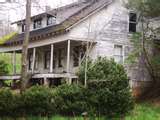 shutters askew and holding out the promise of discovery if I open the doors and go in for a visit. They are a treasure trove of memories and historical significance, and all too often very costly to restore or maintain. I was recently introduced to this New Jersey preservation site which I am happy to share.
 -
Several years ago when I was editing a manuscript that would be used in Burundi for a faith-sharing
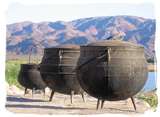 process, I was given a book to read entitled, Theology Brewed in an African Pot, by Agbonkhianmeghe E. Orobator. I was a bit intimidated at first, expecting the vision from a culture so markedly different from my own to pose a challenge. I was delightfully mistaken. One passage resonated with me and has been shared many times:
“We need to dispel the notion that theology is the exclusive preserve of experts and academicians. Theology is something that we all do all the time, even without actually paying attention to it.
“I find no better illustration of this than the conversation between Mr. Brown and Chief Akunna. The former had probably spent a few years studying the Bible and theology in his native England to prepare for his missionary journey to the African village of Umuofia. He possessed an impressive mastery of the religious vocabulary and could reel off the theological terminologies with ease.
“Chief Akunna had not received any formal theological training in the knowledge of his religion. Notwithstanding, he possessed a native sense of religion that made him a theologian of no lesser statue and repute than Mr. Brown. He knew how to talk sensibly about God—the nature of God, the meaning of workshop, meditation and creation, divine providence, and divine retribution.
“In the course of this engaging conversation between Mr. Brown and Chief Akunna we get a clear idea of the meaning of theology: talking sensibly about God.”
-
I’ve always hated white aluminum siding. But today I find myself homesick for it, and the little
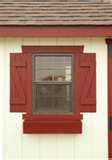 beach cottage that wears it with grace. Weather-worn windows are simply adorned with wine-red shutters and a freshly painted entrance door to match. Red is good energy for an entrance. At least, that’s what I’ve learned from the dog-eared pages of my Feng-Shui manuals. Everything in the house is old. Not old enough to be valued antiques, but old enough to have memories. I even miss the occasional pungent aroma of cigar that wafts through the rooms while I’m there. Since my visits are most often solitary, I imagine the smoker is the keeper of some of those memories. We are on gracious terms, and I often thank him for letting me share in the deep peace of the place. Sometimes, when I am feeling melancholy, I invite him to come and sit a spell, and sometimes, he obliges.
Maybe I am comfortable with the arrangement because the smell of cigars reminds me of my Uncle Elias of Blessed Memory, the epitome of curmudgeon, full of bluff and bluster, who loved his family deeply. I remember him bringing soup and sandwiches from his coffee counter across the street from the hospital where I spent long hours in Hospice with my mom, after my dad died. Each day he would ask the same things about his sister. “Did she like the soup? Did she eat the sandwich? Tomorrow I’ll bring her a pastry.” It was his way of dealing. He fed people. For me, it’s about changing shells, like the hermit crab. My favorite is made of white aluminum with red shutters.
-
Working as part of a writing and editorial team means, of course, paying close attention to how
 things are worded. Our antennae are geared to catch mistakes. So, it is no surprise that we often find ourselves sharing the bloopers we’ve seen or heard during the week.
Last week, a co-worker shared some commentary he had heard during a news story.
The reporter, commenting on the scene of an accident, stated seriously, “The emergency crews have been here since they arrived.”
Wearing our editor’s hats, we had a good laugh at someone not only stating the obvious but getting paid for it, as well. It immediately brought to mind the now famous sayings of Yogi Berra, whose classics include, “It's like deja-vu, all over again,” or “If you ask me anything I don't know, I'm not going to answer.”
Early the next morning, I had to drop some letters in the mail bin downstairs next to another co-worker’s desk. I asked her in all seriousness, “Do you think the post office will return this to me if I don’t put a return address on it?”
My co-worker looked at me with a dead pan expression and after a few seconds of well-pointed silence asked, “How would they send it back to you if you don’t put a return address on it?”
There it was, the big, “DUH!”; the dead quiet filled up with my own unspoken thought, “How could you say anything so stupid?!”
Feeling duly chastised, I remembered yesterday’s laugh fest after hearing the reporter’s comments. “Who’s laughing now?” I chided myself. But when I was done feeling stupid, following yet another lesson in humility, I joined my co-worker in a hearty laugh at my expense.
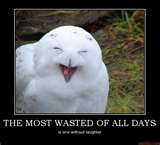
Laughter and a good sleep, said my Irish father, are the best cures for any ill. He was a wise man; one who taught me the value of learning to laugh at yourelf when necessary. This skill, he said, encourages us to not take ourselves so seriously, which can result in our becoming so “full of ourselves” that there is little room for anything else.
As a student of life, my father’s antenna was raised to the incongruities inherent in being human, and he was fond of pointing out that no amount of education, authority or power will prevent a person from making a fool of him or herself at some point in time. And while he admitted sometimes appreciating being there to see it happen, he was careful not to gloat too obviously because he knew his time was coming. And when it did, he was always ready with a laugh.
When I think back on the most memorable times and people of my life there is always laughter involved. Sharing and making memories with family around the kitchen table, friends at work whose humor relieved stressful situations, laughter in a hospital room or even in a funeral parlor which, if even for a brief moment, eased the pain of loss and offered a glimmer of life’s hope, beauty and the promises of God. “A joyful heart is the health of the body,” says the psalmist, and certainly that has been true in my own life.
But on those days when even a smile seems hard to muster, I try to remember the words of another wise, but unknown, author: “Even if there is nothing to laugh about, laugh on credit.”
"Laugh at yourself and at life. Not in the spirit of derision or whining self-pity, but as a remedy, a miracle drug, that will ease your pain, cure your depression, and help you to put in perspective that seemingly terrible defeat and worry with laughter at your predicaments, thus freeing your mind to think clearly toward the solution that is certain to come. Never take yourself too seriously." Og Mandingo