• This year, there will be no celebrating St. Paddy’s Day in the local pub. The pubs, like the restaurants, are closed for celebrations, and, for the first Cliffordsbartime in history since the 13th century, kissing of the Blarney Stone has been postponed until further notice.

    Who would have imagined that we’d be in this place at this point in time.

    Still, memories and people can always be celebrated and St. Paddy's Day is a perfect time to celebrate my sainted dad, Eddie Clifford, who had the magic of Ireland and leprechauns in his heart.

    I never met my father’s father. He hailed from County Cork, Ireland, but was murdered here in the U.S. when my dad was just seven years old. They found his body floating in the Hudson River.

    I didn’t learn about his death until I was an adult. I chastised my father for never telling me about his father and he, the typical Irishman, replied, “You never asked.”

    I imagine my father’s love for all things Irish, and his delightful gift of storytelling, came from his father, who worked in a cemetery and dug graves. Imagine the stories he must have told!

    It’s not surprising my dad could enchant a table full of guests with stories of his dad bringing home wagons of wood, most likely from old caskets, for the wood stove and my grandmother throwing him and the wood out the door. 

    She’d rather be cold than bring the devil down on the house by burning wood from some poor soul’s casket, she would say, and backed it up with a well-tossed shoe.

    My father spent a lifetime saving money to visit his father’s Ireland, and when he did visit he came back elated, except for one thing. A roll of film from Blarney Castle had been lost because of the shenanigans of a leprechaun he had the unexpected pleasure of meeting.

    As the story goes, dad and my uncle, Donald, went to dinner, complete with Irish music and dancing, in Blarney Castle. At some point he decided to step outside for some air. There, at the bottom of the castle steps, was an unusually small man with an equally unusual appearance.

    My dad struck up a conversation with the visitor, who graciously offered my dad a pipe. Not being a smoker, my dad turned him down but asked if he could take his photo instead.  They were having a grand ol’ time, each with their own unique gift of gab, and he wanted a keepsake of their time together.

    ShillelaghgttThe wizened man smiled, so my dad snapped his picture. When he lowered the camera, the little man was gone. But there, on the steps, was a carved walking stick, a shillelagh. My dad brought it home with him.

    Back in the states, when my dad took the role of film to be developed it was blank. There would be no pictures of Blarney Castle for his photo album so he would have to rely on memory to share his stories – which he managed to do quite well.

    When my dad died, I inherited the shillelagh.

    Today I will be making our corned beef and cabbage dinner. I imagine dad sitting in the living room recliner, appreciating the aroma while enjoying a cup of coffee, followed by “just a half cup” so as not to spoil dinner.

    He would be carefully perusing the daily paper or enjoying the latest in British comedies, a twinkle in his eye and his shillelagh resting in the corner of the room. The local pubs may be closed this year, but somewhere a wizened old man is puffing on his pipe and smiling.

    Loved ones are always with us. They deserve to be remembered and celebrated. If you can’t raise a pint at the pub, raise a half cup of coffee at the family table and tell their stories.

    Miss you dad. I hope you and Uncle Donald are celebrating today with the angels.

    Mary Clifford Morrell is the author of "Things My Father Taught Me About Love," and "Let Go and Live: Reclaiming your life by releasing your emotional clutter," both available as ebooks on Amazon.com.

  • If there’s one event I look forward to every year during Black History Month, it’s the celebration sponsored by the
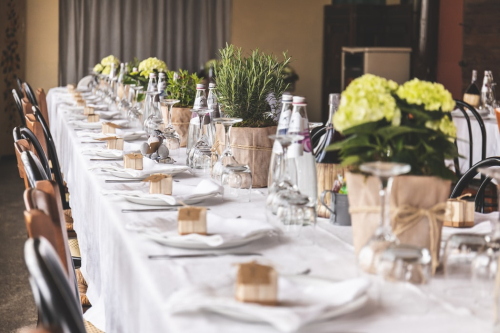
    TablePhoto by Luigi Pozzoli on UnsplashToms River Branch of the NAACP and the Ocean County Library that combines food and community with a whole lot of soul.

    This year’s “Celebrate Black History Month” program is set to begin at noon on Feb. 22 at the branch located at 101 Washington Street in the heart of downtown Toms River. To make a reservation, call 732-349-6200.

    It’s always a warm and welcoming afternoon, one that includes entertainment and information for all generations and a place at the table for all at a food tasting prepared by members of the NAACP.

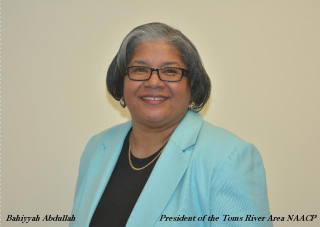
    Recently Bahiyyah Abdullah, president of the Toms River Area NAACP met me in the cafe at the library to talk about what the program has to offer this year. There will, she said, be music and Stepping by young people who simply spellbind the audience with their mastery of producing complex rhythms and sounds through a mix of footsteps, spoken word and hand claps.                                                                                                          

    And there’s going to be a theater piece by members of the Bright Start Touring Theatre who will present their program “Struggle for Freedom: The Life of Dr. King,” sponsored by the NAACP and Friends of the Ocean County Library.

    All of this leads up to the annual grand finale. That’s when the lids come off the food warmers on the buffet tables and the line forms for the “tasting” of African American heritage foods that are a major hallmark of this event.

    Bahiyyahcaption2Abdullah, who is also the Chief Mission Officer of the Girl Scouts of the Jersey Shore, spoke of the event as a time that “enables us to celebrate our culture and keep it alive and share it. It wasn’t always taught in schools.”

    It’s an eye-opening experience, she said, “one where everyone has a good time. Many people tell us that they wait for the library booklet to come out every year so they know when it will be. Usually, we get between 125 and 150 people. It’s one of the largest programs of the year.”

    In a small way, she said, the buffet mirrors the food offered by the new African American Museum in Washington where the foods of the African diaspora are featured. “You have to wait on line for a long time,” said Abdullah, who has visited there twice and plans to return. “It brings together people and foods from all different cultures. It’s a wonderful experience. "cultures through the food.”

    In past years at the library event, I’ve savored Macaroni and Cheese, ribs and some of the best fried chicken I’ve ever eaten.

    “Expect to see food from north to south,” with an emphasis on the south, said Abdullah, who originally hails from the south. Her legacy Banana Banana-pudding-ck-222208-x


    Pudding Recipe is a sweet testament to that culinary tradition.

    Bahiyyah Abdullah’s Legacy Banana Pudding Recipe

    INGREDIENTS

                                – ¾ cup sugar, divided in half

                                - 1/3 cup flour

                                - 3 eggs, separated

                                - 2 cups milk

                                - ½ tsp. Vanilla

                                - 45 vanilla wafers

                                - 5 bananas, sliced

                                - dash of salt

    DIRECTIONS

    Heat the oven to 350 degrees.

    Mix ½ cup sugar, flour and salt in the top of a double boiler. Blend in 3 egg yolks and milk. Cook, uncovered, over boiling water 10 to 12 minutes or until thickened, stirring constantly. Remove from the heat and stir in vanilla.

    Reserve 12 wafers for garnish. Spread a small amount of the custard on the bottom of a 1-1/2 quart baking dish. Cover with layers of 1/3 each of the remaining wafers, bananas and remaining custard. Repeat layers 2 times.

    Beat the egg whites on high speed with a mixer until soft peaks form. Gradually beat in the remaining sugar until stiff peaks form. Spread over the custard, sealing well to the edge of the dish.

    Bake 15 to 20 minutes or until lightly browned.

    The pudding, which serves 12 at 2/3 cup each, should be cooled completely. Refrigerate until ready to serve. Top with reserved wafers just before serving.

    Photo by Luigi Pozzoli on Unsplash

    Lois Rogers has been writing about faith, family and food since the late ‘90s, most notably in her award winning blog, “Keeping the Feast,” which appears this year during this Lenten season on TrentonMonitor.com  “A Place at the Table” is her new blog currently under construction. Lois is available as a guest speaker for parishes and local organizations and speaks on a variety of topics. Contact her at loisrogers66@gmail.com.

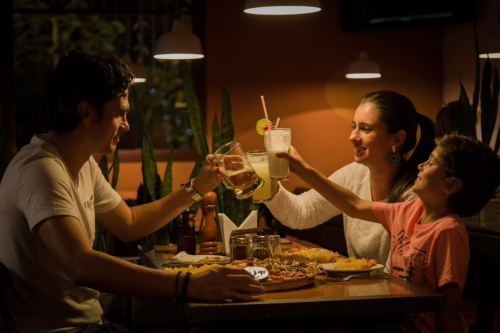
  • One of our favorite experiences as a family of eight was dinner in our local diner, even when the Familyrestaurant
    youngest were still in diapers. The experience was magnified when we traveled across country with our best friends and their five children.

    The look on the servers’ faces when we walked into a restaurant with four adults and 11 children was nothing short of priceless. But it was never the nightmare they expected. Our kids loved spending time together, talking, laughing, occasionally pranking, and always eating. And we expected them to clean up any mess they made, even on the floor.

    We were blessed that our children were raised in a time without technology that would find its way to the table, and dinner was about sharing stories, expressing opinions, and, subsequently, learning how to bring gratitude and respect into the ordinary experiences of daily life. Today’s parents and grandparents face quite a different challenge.

    The world seems to be moving faster. Parents are stretched to the limit, and family life is a bustle of activity beyond what we experienced. Parents often share with me that eating out is an exercise in frustration, even with two children, and they resort to allowing children to connect to cell phones or a variety of technology at the table, which often includes headphones, to keep children occupied and in their seats long enough for mom and dad to talk to each other for a few minutes.

    Many parents acknowledge being uncomfortable with the practice, even though they allow it, because they have a sense that valuable time with their children is being lost.

    Pope Francis agrees, and, in his Dec. 29 Angelus in St. Peter’s Square on the Feast of the Holy Family, encouraged families to put down their cell phones during meals and reclaim that important family time. “We must resume dialogue in the family: fathers, parents, children, grandparents and siblings must communicate with one another.”

    This communication is a vehicle for love. It’s also an important part of faith, where traditions and prayers are shared at the same meal.  More than just a list of dos and don’ts and statements of beliefs, our Catholic faith is what we do in our daily life, our daily decisions, our intellectual, emotional and spiritual growth which all happen, as well,  outside of worship and catechism classes. 

    A lot of that growth takes place around the table when families eat together, even in a restaurant.

    From the moment children walk into a restaurant they are in relationship with everyone there – parents, servers, bussers, and other customers. They have a unique opportunity to learn any one of a hundred small lessons about what it means to honor God and others when out in the world.

    Children learn to develop self-respect through self-discipline, to make decisions about their menu choices, speak respectfully to staff and parents, be mindful of their behavior which impacts other patrons, and say thank you to others – a foundational expression of gratitude.

    Most importantly, children come to learn a simple truth. We make time for those things which are important to us. When we make the time for and are present to each other during a meal, children come to know that every member of the family is valued and loved.

    As people of faith, our best example of the power of shared meals is Jesus.  The Gospels are full of stories of Jesus eating meals with those he wished to touch and teach. None was more important than the Last Supper.

    Meals were a time of entering in to the lives of others while sharing spiritual and human truths. I once read a scholar’s description of Jesus’ style as “eating his way through the Gospels.”

    It made me laugh, but reminded me that what’s happening at family meals is an exchange of love and love transforms us. It encourages me to stay strong when I say no to a grandchild’s request to use their Tablet or their cell phone at the table.

    I’d rather we had a discussion as to why the only potatoes they will eat are French fries, or what’s suitable to dip in ketchup.  And I can regale them with my many reasons for gagging on peas.

    Mary Clifford Morrell is the author of "Things My Father Taught Me About Love," and "Let Go and Live: Reclaiming your life by releasing your emotional clutter," both available as ebooks on Amazon.com.

    Photo by Pablo Merchán Montes on Unsplash

  • Today is a good day to write about failure, because today I was told that nothing I say is important – a defeating and Believediscouraging thought, especially for a writer. They are words meant to wound, an intention that leads others to self-doubt.

    Most people, and particularly, most writers, struggle with self-doubt at one time or another. At times it can be paralyzing, at others infuriating, but always it carries the possibility that it will win the war for your spirit, especially if the war has been a long-time running.

    I recalled the words of award-winning romance and science fiction writer for teens, P.C. Cast:  “I seek strength, not to be greater than others, but to fight my greatest enemy, the doubts within myself.”  I read them and nod my head in understanding … and empathy.

    Often times I have rummaged through the worn shelves of a second hand bookstore, called by the pages which beckon me to open them and read the treasure inside. A thought that too often comes to mind on those occasions is my imagined reality that the world does not need more writing, especially from me.  It needs more respect, more love, put into action; more generosity to make someone’s life better, more presence so the self-doubt and sense of failure of those who are lonely may be dispelled.

    Margaret Atwood, Canadian poet, novelist and author of “The Handmaid Tale,” describes failure as “just another name for much of real life: much of what we set out to accomplish ends in failure, at least in our own eyes. Who set the bar so high that most of our attempts to sail gracefully over it on the viewless wings of Poesy end in an undignified scramble or a nasty fall into the mud? Who told us we had to succeed at any cost?”

    We are our worst enemy. We can be hard on ourselves, and that pressure is surely magnified when we hear our self-doubt mouthed by someone else. To escape the damage we must never allow those words to destroy our sense of self-worth. I once read that failure is an event, never a person. When our failures expose our self-doubt we must be mindful that we are not our failures. They are our lessons. We do well when we choose to learn from them.

    Writers are not alone in this struggle. Anyone who desires to achieve something can suffer with self-doubt. One of my favorite artists, Vincent Van Gogh, seemed to live in a constant crisis of self-doubt and suffered enough to be confined to an institution at times.  He is as well known for cutting off part of his ear as he is for his painting.  Still, he wrote, “"If you hear a voice within you say you cannot paint, then by all means paint and that voice will be silenced."

    For my writer friends, those who do and those who would love to, I would encourage you to write, even in times of self-doubt, and leave you with the thought of Mexican writer Don Miguel Ruiz: “Your word is the power that you have to create; it is a gift.”   Use it well.

    Mary Clifford Morrell is the author of "Things My Father Taught Me About Love," and "Let Go and Live: Reclaiming your life by releasing your emotional clutter," both available as ebooks on Amazon.com.

    Photo by Katrina on Unsplash

  • We were strangers in a strange land that first Christmas on Yale Avenue.                                                                                                                                            Familytable
    Fresh from Newark by way of a post-World War II respite in Laurence Harbor, we had come ashore to find we were Catholics in a sea of Methodists. At first, they didn’t know what to make of us and we didn’t know what to make of them.

    As adolescents will though, my brother Pete and I soon began to communicate with the kids on the street, and background was quick to come up. From them we learned that many were part of a large community of self-identified “clamdiggers” – fisherfolk, boat builders and business people of British and Northern European ancestry who had been there for generations.

    We also learned that most of the kids went to Sunday School at the Methodist Church and many belonged to DeMolay and Rainbow Girls – youth organizations of the Masons which we were expressly forbidden to attend by the nuns who oversaw our religious training.

    With our original city orientation and our mixed variety of Euro-genes – Italian, Irish, English and Central European – we sometimes felt like outsiders in our neighborhood. This was relieved by Catechism classes in St. Peter, our new home parish and preparation for Confirmation.

    Since a hallmark of our childhood had been the open doors of the Bayshore and Newark, we wondered how the differences in our backgrounds would translate here. Would invitations to hang out, stay for lunch or dinner or snacks, be forthcoming? Would our invitations to the kids in the neighborhood be accepted?

    What would the food be like? Would they like our food which was often peppered with spices – Italian and Hungarian?

    Our brother Mark was only four and too little to be concerned, but Pete and I got our first inkling when we were invited by a family down the street for dinner.

    It turned out to be roast chicken, potatoes and a whole lot of jello with whipped cream. Perfectly plain and unlike at our house, nothing spicy at all. My father was known to spike almost everything with crushed red pepper when mom’s back was turned, so the fare seemed kind of bland, but quite palatable.

    The moms in the neighborhood were curious about what would turn up on our table and, I’m convinced, invited themselves to coffee one Wednesday afternoon to find out. A popular commercial of the day touted the Prince brand of Italian foods with “Anthony” running home every Wednesday for Spaghetti.

    The house failed the garlic sniff test that day, though. As the neighborhood learned, Sunday was spaghetti day in our house.

    Culinary curiosity about us really started building in the fall with Thanksgiving. The neighbors were interested to learn that our table had a hefty mix of American and Italian favorites. What would Thanksgiving be without Grandma Mae’s Brasciole and her homemade ravioli, after all?

    As Christmas approached, we learned that by mutual agreement, trimming the trees did not take place until Christmas Eve on our street. That was fine with us because ours had always gone up on Christmas Eve, too. It was also a tradition on the street for parents and kids to gather at one of the houses late at night for a celebration after the trees were trimmed.

    In what would become an ongoing tradition at our house, Dad and Mom decided it would be a perfect icebreaker to invite everyone in to share our Christmas Eve.

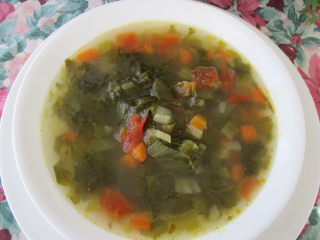
    Our tradition was not the Feast of the Seven Fishes so popular today, however. It was Grandma Mae’s Escarole Soup and Italian bread for a light dinner. Then hours of concentration on the tree, setting out the manger Dad had made and straightening up the house. This was followed by the perfectly wonderful, literal “pig out” open house after Midnight Mass
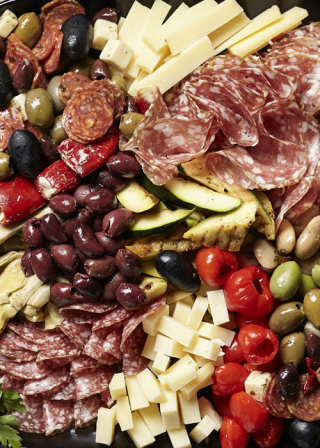
    Antipasto-Platter.As per Dad’s tradition, it featured heaping platters of antipasto with assorted Italian cold cuts, Italian cheeses, mixed olives, pickled mushrooms, roast peppers and the like. All of it was consumed with gusto by our mainstream neighbors, who reached our house after touring each other’s Christmas trees.

    It turned out to be just the first of many such festive Christmas Eve finales on the block.

    I have since come to call this meal, “The Feast of the Seven Salamis” and look forward to a variation of it every year in my own home. I did go through a traditional Catholic period of doubt about its origins though, as most Italian-Americans of my acquaintance cling to the fishes on Christmas Eve.

    The doubt was relieved this year by a terrific tutorial from Msgr. Sam A. Sirianni, rector of my home parish, the Co-Cathedral of St. Robert Bellarmine in Freehold. At the annual Christmas Carol Festival Dec. 6, he expounded on Italian Christmas customs.

    The Feast of the Seven Fishes, he explained to an audience of over 300, is not, strictly speaking, an Italian tradition. Instead, it’s Italian-American.

    “Catholics recognize Christmas Eve as a festal night,” he said. “In fact, all (Christian) immigrant communities make it a special time. It is a time when all the family can gather and celebrate the collective memory of foods that remind them of home.”

    In Italy, and in many Italian-American homes, he said, there are two night time meals. The one before Midnight Mass is meatless in remembrance of abstinence requirements which applied before the Second Vatican Council. Meat can definitely be served at the second meal in the wee hours of the morning after Midnight Mass, he said.

    “Whatever food that is available that is meatless can be served,” for the early meal, he said.

    “Today, in America, with the Seven Fishes, it is more of a gourmet experience,” Msgr. Sirianni said. But in the old times, when there was more poverty in Southern Italy, especially, “you served whatever you had. My favorite example is polenta which now is considered a gourmet food by some,” he said.

    “It’s mush. It’s what you served when you had nothing else to eat,” he said. For the poor, the Feast of the Seven Fishes was apt to focus on pasta with “sardines, with beans, with eel. Most people won’t look at an eel today. But back then, they used stuff no Americans would want but their use of herbs and spices made them delicious dishes,” he said.

    These dishes, he said, “drew the family together at a time when society was prejudiced and suspicious of immigrants. They could be together in the home and celebrate,” said Msgr. Sirianni.

    I like to think the Feast of the Seven Salamis could have been the meal St. Francis had in mind when he admonished a friar for wanting to abstain
    from meat on the feast day, saying that on Christmas, he would “smear the walls with meat.”                                                Escarole
    RECIPES

    Grandma Mae’s Escarole Soup

    Ingredients:

    – 2 tblsp. Extra virgin olive oil

    – 2 cloves garlic, crushed

    – 2 small carrots, diced

    – 1 sweet onion, diced

    – 1 pound loose, sweet Italian sausage (optional), broken up into small pieces

    – 1 small bulb fennel, chopped

    – 3 plum tomatoes, chopped, with the seeds removed

    – 2 celery stalks, diced

    – 12 cups water

    – 1 tblsp Better than Chicken bullion dissolved in a small amount of warm water

    – 1 head escarole, washed and cut into strips

    – 3 large eggs

    – grated Pecorino Romano Cheese to taste

    DIRECTIONS:

    Heat the garlic in oil in a large stock pot over a medium flame. Add the fennel, carrots, celery and onions and cook for 5 minutes. Break the sausage apart and cook it, stirring with a wooden spoon until browned. Add the tomatoes and cook lightly. Add the water and the Better than Bullion mix and bring to a boil. When the water is boiling, add the Escarole and cook until tender, tasting for seasoning and salt as desired. Lower the flame to simmer. Meanwhile, whisk the eggs together in a bowl. Stream the mixture gently into the broth while stirring with the wooden spoon. Serve with grated cheese.

    ASSEMBLING A TRADITIONAL ANTIPASTO PLATTER:

    First choose a selection of cured meats. A general rule of thumb is 2-3 ounces of cold cuts per person. . I like to include Genoa and hard salami, sopressata and prosciutto, which I sometimes wrap around slices of melon. Some rare roast beef thinly sliced and pepperoni, more generously sliced, are favorites. A range of Italian cheeses cut into small chunks might include provolone, parmigiano-reggiano, and mozzarella cheese. Irish and English Cheddar, Blue Cheese and Stilton are zesty accompaniments as well.

    Choose a variety of vegetables such as jarred artichokes, pickled mushrooms, sun-dried, cherry or grape tomatoes, roasted red bell or cherry peppers, chickpeas, or cipollini onions. At least two cups of mixed olives and stuffed grape leaves.

    Assemble on a large platter, marble slab or generous cutting board, rolling the cold cuts for a nice presentation and arranging the ingredients in groups around a bowl with the olives in the center. Set out party style tooth picks to make selection easier.

    Lois Rogers has been writing about faith, family and food since the late ‘90s, most notably in her award winning blog, “Keeping the Feast,” which appeared in The Monitor. “A Place at the Table” is her new blog currently under construction. Lois is available as a guest speaker for parishes and local organizations and speaks on a variety of topics. Contact her at loisrogers66@gmail.com.

  • This year Christmas will be very different for us and it’s taken some real effort on my part to adjust. My oldest son and his family, including my Camels
    three young grandsons and a fourth in Childrens' Hospital of Philadelphia NICU will not be celebrating with us this year. They will celebrate as a family in their home away from home in Philly where mom has relocated to be a constant presence for their newest child.

    In addition we, the adults, have decided to forgo gift giving this year, to focus on the more important meaning of the season, and eliminate the stress that too often accompanies a time that is meant to be holy and peaceful. This is an adjustment for all of us, though, I’m sure, welcomed by many.

    For most of us, the holidays are a time of traditions, when memories of past celebrations help frame our present rituals. Change can be hard at these times, but remembering the real blessings can help make the changes not only bearable but important milestones in our spiritual growth.

    As an only child living in upstate New York, my memories of Christmases past always include a quiet morning with my parents, opening gifts which spilled out from under an artificial tree decorated with the biggest lights I can remember, wrapped in garland and weighed down with silver icicles. By today’s standards it might have been garish, but then it was wondrous.

    Our Christmas visits to family were not times of gift-giving, but times of sitting around a table, eating and drinking and sharing multiple conversations all at the same time. They were joyful times, even when the conversations became heated. There were enough children always present that we didn’t pay much attention to adult things. That in itself was a gift.

    I remember feet of snow needing to be shoveled from the driveway, hot chocolate and mamool, a Syrian pastry made with cream of wheat and ground nuts, and I remember a few favorite gifts – like the guitar my parents hid in the coat closet, my first transistor radio and my powder blue ice skates.

    But the gift that was most memorable, and continues to make a difference in my life even today, was a set of large, beautifully illustrated books of Old and New Testament stories, books of memories of both the Hebrew and Christian people.

    The stories and colorful prints that accompanied them introduced me to Adam and Eve and the serpent, to King Solomon who wisely settled an argument between two mothers claiming the same baby by suggesting the child be divided in half and shared, and to Daniel, who survived the lions’ den through God’s intercession and saw the Tower of Babel fall as humanity sought to become like God.

    But the story that most fascinated me was that of Shadrach, Mishach and Abednego – the three young men who survived being thrown in a fiery furnace because an angel of the Lord walked with them in the fire.

    Like so many figures in Scripture, these were people through whom God carried out his work, whose relationship with God gave them life, and made them strong and resilient in spite of their human frailty.

    Pope Francis has said, “Memory makes us draw closer to God. The memory of that work which God carried out in us, in this recreation, in this regeneration, that takes us beyond the ancient splendor that Adam had in the first creation.”

    The Holy Father calls us to consider, not only during our holy seasons, but every day: “What’s my life been like, what was my day like today or what has this past year been like? (It’s all about) memory. What has my relationship with the Lord been like? Our memories of the beautiful and great things that the Lord has carried out in the lives of each one of us.”

    Mary Clifford Morrell is the author of "Things My Father Taught Me About Love," and "Let Go and Live: Reclaiming your life by releasing your emotional clutter," both available as ebooks on Amazon.com.

    Inbal Malca photo on Unsplash.

  • When my sons were young, I told them the story of Patrick, the penguin, who, even though he was poor, and a penguin, had the very best Christmas Nativity presence and he made a point to share it with everyone he knew who needed some Christmas cheer.

    My sons, not being able to read, didn’t understand the difference between the word presence and presents, but by the end of the story they understood that Christmas gifts didn’t always have to come from the store. In fact, the best Christmas present couldn’t be wrapped, unless it was wrapped in a hug and the beautiful smile of someone with whom you were celebrating the holy and festive holiday of Christmas.

    I often recall the email one of my sons sent me some years ago when finances were tighter than usual. He knew the pleasure I took in filling stockings and buying presents for everyone, even as the family expanded from my six sons to more than a dozen loved ones.

    He wrote, “This year, don’t worry about gifts. Take comfort in knowing that we’ll all understand and that we don’t expect much anyway. I think I speak for all the boys when I say that we enjoy Christmas morning for the spirit of the day; the company and the love of one another. No matter how many gifts are under your tree, it’s the celebration that we all enjoy most.”

    It certainly touched my heart, and I wondered if he remembered Patrick.

    For me, while I do love to give gifts, the best part of every holiday is just being with all my sons and their families at the same time. Of course, that is not always a possibility, given their many responsibilities, and I’ll admit I’m sad when one of them can’t join us.

    It just seems when I was growing up there were many more family gatherings, with aunts and uncles and lots of cousins, more discussions and laughter and arguments around a table, more sharing of food and drink and stories, more presence, more time – and I miss it.

    Life seems to be spinning faster and faster these days, or maybe I’m just moving slower and slower.

    I wonder if it’s possible today to find space inside time to regain those simple celebrations of relationships that were at the heart of so many families.

    Perhaps that’s one of the reasons why I treasure the modest Nativity that sits on our front lawn throughout the season, reminding me that the heart of Christmas rests with the Holy Family.

    Somehow we have allowed the focus on gifts to become a distraction from the profound meaning of this holy celebration – God’s desire to be in relationship with his people, becoming one of us within the womb of family. It is sad to know that Christmas, such a beautiful gift to us, has become a difficult, stressful time for so many because we have lost sight of what’s important.

    Christmas is all about relationship: Mary, Joseph, angels, shepherds, wise men, even the many animals our traditional crèches include, were called to be in relationship with a tiny baby, Lord and Savior, God.

    When we reflect on the Nativity we may see beyond wrapped presents and embrace, instead, the power of presence. We may be able to shake the need for the perfectly decorated house, and marvel, instead, at the beauty of a humble manger.

    When we see the Crèche as more than a tender greeting card image, we may share in the only gift that matters – Love.

    Mary Clifford Morrell is the author of "Things My Father Taught Me About Love," and "Let Go and Live: Reclaiming your life by releasing your emotional clutter," both available as ebooks on Amazon.com.

    Photo by Gareth Harper on Unsplash

  • As a Catholic, I have a confession to make. I read, reflect on and often incorporate the wisdom of other religious teachers in my life. Buddingflower

    I have always felt it would be arrogant of me to suggest that God limits the wisdom of the Holy Spirit to only those of one particular faith tradition. And very often I am edified by a particular insight.

    Today’s bit of wisdom centered on our tendency, as human beings, to allow the miracles in our lives to lose their meaning, to become commonplace.

    What a miracle it is to have someone to love us, to experience the birth of a child, to find a new job, grow a garden, experience a return to health or be graced with good friends.  At first, our hearts are full of gratitude and love for God’s gifts, but too often, when love demands something of us, or work becomes a challenge, the miracle becomes routine, not worth the effort or fullness of heart with which we once embraced the gift.

    This preacher used the example of the birth of a child, a miracle that fills us with love so profound it’s hard to even describe. And then, he offered, the child becomes a difficult teenager and we ask, “God, why did you do this to me??” Of course, parents always have those moments of frustration or feeling overwhelmed. It doesn’t mean they don’t recognize the miracle of their children. But I understood what the preacher was trying to say.

    Sometimes we lose sight of how miraculous those things we often consider ordinary really are. When once we might have been awed by the budding flower or the love of another person, there comes a time in our lives when we take these things for granted.

    Even St. Augustine recognized it: “We take for granted the slow miracle whereby water in the irrigation of a vineyard becomes wine. It is only when Christ turns water into wine, in a quick motion, as it were, that we stand amazed.”

    One of the greatest miracles, which most of us rarely consider during the course of our day, is the human heart. It was designed to beat about 100,000 times a day or 35 million times a year. That totals some 2.5 billion continual heart beats during an average lifetime.

    This is the kind of miracle the psalmist understood well: “I will give thanks to you, for I am fearfully and wonderfully made; wonderful are your works, and my soul knows it very well.”

    In the deepest part of us we recognize the miracles, we feel the joy of knowing the great love God imparted in creating the world for our good, and in creating us in God’s image. But living our lives can be challenging and losses painful.

    We also may fall prey to the secular values that grow up around us, encouraging us to never be satisfied with what we have. It is in those times that our minds take over. We may dwell on the disappointment and become cynical about the miracles.

    This is a good time to accept Jesus’ invitation to "come away by yourselves to a secluded place and rest a while."  Even a prayerful walk around the block, breathing deeply and being mindful of the complexity and beauty of nature can bring us back to a sense of the miraculous that is life.

    I have always been appreciative of Albert Einstein’s perspective on miracles. “There are two ways to live: you can live as if nothing is a miracle; you can live as if everything is a miracle.”

    Mary Clifford Morrell is the author of "Things My Father Taught Me About Love," and "Let Go and Live: Reclaiming your life by releasing your emotional clutter," both available as ebooks on Amazon.com.

    Photo by Anna Gru on Unsplash

  • There are those friends in life who have such a way with a turn of phrase that they always keep you smiling, at least, or laughing, at best.  I have Two boys
    such a friend, and no matter how poorly I may feel on any given day, her phone calls are sure to lift me out of the doldrums.

    Today, as we shared our growing need for being frugal, she admitted she had acquired the gift of her grandfather and developed “a talent for the tape.” She was referring to duct tape, a staple used by her grandfather to hold together his car, and just about everything else that needed repair.

    My dad, who was also a duct tape aficionado, grew up during the depression. His motto was “Why buy new when you can fix it with tape?”

    My husband, born in a different generation but with lots of mouths to feed, had a similar motto, so duct tape was the go-to for all possible repairs, and, in his case as a carpenter, as the occasional bandage, as well. He even has a wallet made out of duct tape, a gift from his sister.

    This morning, just after my uplifting phone call with my friend, I noticed my husband going out the front door wearing his brown work boots held together in the front with silver duct tape – like some weird version of a 1920s two-toned lace-up.  I couldn’t stop laughing, but had to admit that was a $50 savings right there.

    “Have duct tape, will travel,” he laughs.

    It occurred to me that friends are like duct tape – invaluable, flexible, reliable, helping you hold things together when you are torn or broken, or simply brightening up your life with their many colors and patterns.  And yet there is a deeper dimension to friendship that holds friends close to our hearts.

    Father Henri Nouwen describes it beautifully in his book “Out of Solitude: Three Meditations on the Christian Life": “When we honestly ask ourselves which persons in our lives mean the most to us, we often find that it is those who, instead of giving advice, solutions, or cures, have chosen rather to share our pain and touch our wounds with a warm and tender hand. The friend who can be silent with us in a moment of despair or confusion, who can stay with us in an hour of grief and bereavement, who can tolerate not knowing, not curing, not healing and face with us the reality of our powerlessness, that is a friend who cares.”

    When I read these words I am reminded of those times when Jesus most needed this kind of friend.  I think of the moving painting by Carl Heinrich Bloch of the Scripture story of the angel who comes to comfort, encourage and strengthen Jesus in the Garden of Gethsemane before his arrest.

    And I think of Mary, Jesus’ mother,  and his mother’s sister, Mary the wife of Clopas, and Mary of Magdala standing at the foot of the cross with John, the beloved disciple.  In their own weakness they faced the reality of Jesus’ chosen powerlessness. They offered no advice, no solutions, no cures, but each would have touched his wounds with warm and tender hands if they could.

    Friendship, wrote Father Nouwen, “is one of the greatest gifts a human being can receive. [It] is being with the other in joy and sorrow, even when we cannot increase the joy or decrease the sorrow. It is a unity of souls that gives nobility and sincerity to love. Friendship makes all of life shine brightly.”

    In their light, we can appreciate the gracious words of St. Theresa of Avila: “What a great favor God does to those who he places in the company of good people.”

    Mary Clifford Morrell is the author of "Things My Father Taught Me About Love," and "Let Go and Live: Reclaiming your life by releasing your emotional clutter," both available as ebooks on Amazon.com.

    Photo by Kevin Gent on Unsplash

  • For a time, I have become the primary caregiver of my three young grandsons while their parents attend to their newborn who needs specialized Lantern
    care in an out-of-state hospital.

    I’ll be honest. It’s not an easy transition for someone in their sixties who has adjusted to working from home on her own schedule, often in a recliner.

    I joked with my daughter-in-law that in preparation for my new role as caretaker I had been slowly working myself back up to a minimum 3,000 steps a day, still far short of what is adequate to be healthy. That was before she went into premature labor.

    After two days of caring for a two-year-old, and two school aged brothers, I told her my body was in shock, having already reached 3,000 steps by 10 a.m. each morning.

    After two weeks, we have all adjusted pretty well, though I can often see their “missing mom and dad” look passing over their faces. It became more than just a look when a blackout plunged us in to darkness just before dinner one day last week. What made it worse was the howling wind outside.

    The older boys, six and nine, tried to be brave but soon dissolved into tears and trembling lips. It wasn’t so much the blackout as the blackout without mom and dad to comfort them. Nannies are good for lots of things but, as the two-year old’s t-shirt proclaims, “There ain’t no mommy like the one I’ve got.”

    We scrambled to find the flashlights, large and small, and a few candles and then all got up on the couch in the family room where I read them stories by flashlight. In between, they shared their feelings and fears with me.

    I noticed the candles lit in the kitchen and thought about the power of a little light in the darkness. The Bard himself, William Shakespeare, wrote words about that same thing, words that have become personal to me as my family journeys through a very difficult time: “How far that little candle throws his beams! So shines a good deed in a weary world.”

    It brought to mind the reality that, in this very challenging time, our lives have been lit by the light of scores of people whose goodness has brought me to tears of gratitude on a regular basis.

    I wanted to help my grandsons see the goodness that is all around them, and perhaps allay some of their fears and concerns as they navigate a difficult world, so the next day we talked at dinner about praying for all those people who have been so good to us is so many ways.

    I recalled the neighbor who noticed my grandson’s backpack inadvertently left in the driveway. She drove the backpack to school for him. Or friends and family dropping off food, picking the boys up at school, sending cards and Facebook messages, assurances of continual prayers, and the generous gifts that help with so many needs.

    These people have been the embodiment of St. Matthew’s teaching, “You are the light of the world.” They are in our prayers every evening, as we share a meal often prepared by others, and as we prepare for bed, mindful that we have gotten through the day because others have made it possible through their goodness.

    For us, not only as Christians but as human beings, it is surely others who shine the light into the darkness. They seem to understand that goodness happens in bits and pieces, in moments, not only in movements.

    Archbishop Desmond Tutu reminds us: “Do your little bit of good where you are; it's those little bits of good put together that overwhelm the world.”

    Mary Clifford Morrell is the author of "Things My Father Taught Me About Love," and "Let Go and Live: Reclaiming your life by releasing your emotional clutter," both available as ebooks on Amazon.com.