• I have always admired Dorothy Day. Her strength and commitment to all she believed continues to  IMG_0001 inspire people the world over. Her words are encouraging to me on many occasions, especially when I am  doubting the value of some work I am undertaking. She wrote, "People say, 'What is the sense of our small effort? They cannot see that we must lay one brick at a time, take one step at a time."

    It is easy to be overwhelmed by the needs of the world, the community, our poor, even our families; so much so that we never move out in faith to fill any of those needs. But every journey begins with the first step. The journey of faith is no different. If God can feed thousands with a few loaves of bread and some fish why do we doubt what God can do with our meager efforts?

    I think God has more faith in us than we have in ourselves.

    (Adapted from The Heart's Garden. A limited supply of this small reflection journal is still available. Send $5, which includes postage, to Mary Morrell, 436 Fairview Ave., Colonia, NJ 07067. Include your name, address, contact number or email address.)

  • These past months have been heavy with wakes and funerals. It’s inevitable that each of those would call to mind the wakes and funerals of my loved ones, as it does for many of those who come to pay Xo their respects.


    One of the most painful was my father’s wake. But looking back, I have learned that even in the most painful of experiences there are powerful lessons and moments of truth. For me, the lessons often came from my children.


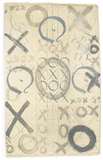
    On this particular night, my youngest son had chosen to express his grief and love by drawing pictures and writing “I love you, Poppy” on little pieces of paper and placing them around my father’s body as it lay in repose. Crosses, hearts and crooked XXXs and OOOs were lined up with as much importance as the American flag, folded and resting on the casket.


    His demonstrations of love had brought most of the adults in the funeral parlor to tears and one elderly on-looker was heard to say, “Oh look, he’s just like a little person.”

    With that my son crawled up on my lap and said stoically, “I don’t like being a little person. It hurts too much.”


    I hugged him tightly to myself and whispered in his ear, “I know. It hurts to be a big person, too.” In an incredibly touching moment he looked up at me and brushed large tears off my cheeks. We understood each other. We shared in the grief. He reminded me of a painful truth—it’s hard to be human.


    It’s hard to be human because it hurts to be human, and it hurts for the same reason that it’s a joy—because we love. And it seems the more we love, the more we are open to hurt from loving and the experience may leave us wondering if love is worth it; if the vulnerability that is required of real love isn’t more something to be feared than something to be valued.


    There were times in my own life when the pain of losing someone I loved was so overwhelming that I determined I would build walls around my heart so as not to be hurt the next time. But in the midst of the pain I soon learned something that was professed by Irish author Enid Starkie: “Unhurt people are not much good in the world.”


    The greatest model for us was our own Christ who loved to what others considered excess, who painfully lamented that his love was neither accepted nor returned, crying, “Jerusalem, Jerusalem . . . how many times I yearned to gather your children together as a hen gathers her brood under her wings, but you were unwilling!” It was this bruised and wounded Jesus, rejected, denied and spat upon, who continued to love none-the-less— enough to die for his Beloved.


    So great a love is difficult to understand, and perhaps more difficult to accept because it often engenders the fear of expectation—what do I have to give in return?

    But what is it we really face in being gathered under the wings of love?

    Peace of heart and soul—and the surety that love makes being human the gift it was meant to be.


  • With September on our heels, I have been receiving schedule emails from my choir directors. Though I look forward with great pleasure to the new season of song, my thoughts of actual performances Menenter always remind me that humbling moments are surely waiting just around the corner; forgetting my part, bursting into song when only the men should be singing, tripping on my dress while climbing the risers, and how can I forget the world premier of our conductor's composition, Requiem?


    During the intermission, all the musicians and chorus members headed downstairs–many stairs—for a brief respite. The hall was soon full of black suits, long skirts and musical scores. After chatting for a few minutes I decided to make a last minute trip to the ladies room. Time must have flown by because when I stepped back into the hall I was alone. Images of a popular commercial ran through my mind. A man stands on the empty streets of a big metropolis with only scraps of paper blowing in the wind. He looks up and down the empty streets for some sign of life, yelling, “Where is everybody???”


    The sinking feeling in my stomach accompanied the realization that “everybody” was lined up at the top of the stairs and ready to go back out into the sanctuary to sing. As I looked up three very steep flights of steps, seeing not so much as a flutter of a black dress around the corner, I heard the sound of applause.


    I ran, kind of, up the stairs, trying not to trip over my dress, but I knew I was too late. A second burst of applause signaled the conductor had now returned to the stage as well. Once at the sanctuary door, huffing and puffing, I paused for a second to consider my options. My place with the altos was on the far side of the sanctuary, which meant I had to walk in front of the entire chorus which was now poised to sing. Or I could sit out the second half.


    With a deep sigh, I swallowed my pride, risked feeling foolish and smiled as I walked quickly across the sanctuary. I was so embarrassed! But once back in my spot and breathing normally, I was glad I didn’t let my embarrassment stop me from doing what I loved.


    Embarrassing moments are humbling moments which can serve us well if we are open to the lessons. My father spoke of them as times when our guardian angels feel the need to “take us down a peg”—for our own good, of course. Who better than our angels to recognize when our growing pride or arrogance threatens to impede our spiritual growth? Plus, humbling experiences hold the key to empathy.


    One of the funniest stories my father ever shared with me was the bathroom door story. It seems the guys in his office had developed the habit of pounding on the men’s room door when occupied, just to pester whoever was in there at the time. They thought it was funny. One afternoon, to their horrified surprise, one of those poundings sent the bathroom door crashing in on the occupant—none other than their boss. This was a man whose pride often made him a difficult task-master. As one might expect, he was furious, and in such a compromising situation, very embarrassed.  Luckily the story has a happy ending. The boss eventually found himself laughing at the incident. When he laughed, everyone breathed a sigh of relief. This humbling moment reminded him that, “Pride goes before disaster, and a haughty spirit before a fall.”  He began a descent from his own opinion of himself and the entire office benefitted from the change.


    Pride, whether it appears as an inordinate opinion of one’s own importance, or as refusal to allow oneself to be humbled, is an obstacle to growth. When we believe there is nothing to be learned from a particular person or experience, or when pride prevents us from asking for help when we need it, then we are embracing pride rather than conquering it.


    When that happens we can be sure there is a bathroom door somewhere waiting to cave in on us!

  • Tonight as I was walking to my car, I noticed something under the tire. As I bent down to get a closer look, I realized it was just a large leaf that had blown down out of the tree overhead Grandfatherwalk during a brief rain storm.

    Then I realized the ground around my car was littered with leaves already turning gold and amber. Could it really be that fall is just around the corner? Leaves don't lie. September will be here in two short weeks. Unlike many who will miss the summer, its sunshine and its warmth, I won't be disappointed when the month changes.

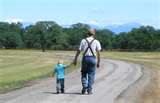
    September is a time for walking, for tasting the crispness of fall air and hearing the crunch of the first fallen leaves under foot. September is a time of change, signaling the end of one season and the beginning of another. In the same way, our faith life flows through seasons and changes that sometimes take us down unexpected paths. Yet, walking with God is like walking with your dear grandfather, who never minds stopping to pick up pinecones or making those interesting little side trips to nowhere. God has a grandfather’s time and waits patiently until we catch up. And when you journey, hand in hand with your loving God, you never know what treasures you might find along the way!

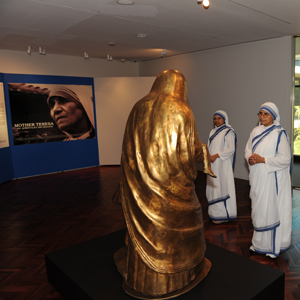
  • Donna Marie Cooper-O’Boyle, EWTN TV host and author of Mother Teresa and Me: Ten YearsMteresa1 of Friendship, will be the guest speaker at the Knights of Columbus celebration in honor of Mother Teresa’s 100th birthday. The celebration will take place on August 26 at the Knights of Columbus Museum, One Columbus Plaza, New Haven, CT.


    Schedule for the day is as follows:

    10:00 am   Exhibition opens


    11:30 am   Unveiling of Mother Teresa postage stamp by New Haven postmaster


    12:15 pm   Birthday celebration (cake)


    2:00 pm   Meet Donna-Marie Cooper O’Boyle, TV host and author of Mother Teresa and Me: Ten Years of Friendship


    4:30 pm   Light reception and book signing by Donna-Marie Cooper O’Boyle. Autographed copies of Mother Teresa and Me: Ten Years of Friendship will be available for purchase.


    5:30 pm  Presentation: "Discovering Calcutta in Our Midst: Mother Teresa's Lessons of Love" by Donna Marie Cooper-O’Boyle


    7:00 pm   Exhibition closes


     The Knights of Columbus Museum is hosting the American premiere of the exhibition, Mother Teresa: Life, Spirituality and Message, which runs from March 25 – Oct. 4, 2010. It is an historical presentation, chronicling Mother Teresa’s life from childhood to beatification by the Catholic Church. It includes biographical information, artifacts such as her sari and other religious and personal articles, as well as a full-scale replica of Mother Teresa’s convent cell (room) in her Calcutta convent.  

    Call 203-865-0400 or visit kofcmuseum.org for directions or more information.


    For more information on Donna Marie check out her websites and blogs:

    Donna-Marie Cooper O’Boyle
    View from the Domestic Church  
     
    Daily Donna-Marie: A Dose of Inspiration
     
    Embracing Motherhood
     
    Moments of Inspiration With Your Favorite Saints
     
    The Dignity of Women

     
    "We can do no great things, only small things with great love."~Bl. Mother Teresa of  Calcutta 

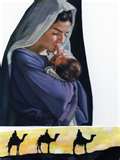
  • For the past several months I have been creating children's material for two Catholic publishers. Believe me, writing for children at a level they will not only understand but appreciate is a lot harder than you might think! I find I have to do almost as much research and reading to create material for a second grader as I do for an adult. But in the reading, I often come across things that I've missed somehow along the way of my faith journey. Often, what catches my attention most often are the words from parts of the Mass; words that have skimmed past me when I was distracted by the moment-to-moment stuff of getting through life.Marykissingbaby

    Today as I was skimming through the Roman Missal to gather some thoughts on the Solemnity of Mary, Mother of God, I came across these words from the opening prayer of the Second Sunday after Christmas (it will be here soon enough!). I don't recall ever hearing these words, though they speak powerfully to my spirit as something I have always been called to do. Once you've read them, there's not much more to do than just pray with them.

    “May the simple beauty of Jesus’ birth

    Summon us always to love what is most deeply human,

    And to see your Word made flesh

    Reflected in those whose lives we touch.” 

  • Last week I met my husband for lunch so he could take a break from remodeling a customer’s bathroom. While we were waiting to be served he took the instructions for a new pedestal sink out of his pocket to read. As I’ve seen him do often, he sat there shaking his head, typical of his being disgusted with the Pedsink quality of directions, and passed the paper over to me to read.

    "Can you believe this?" he asked, saying something about a missing mounting bracket and screws.

    I scanned the pages to find information about the screws but what caught my eye was a box with the words, "Water supply not included."

    I read it twice.

    My first thought was, "They can’t be serious! Is there really someone who would think that the water came with the sink?"

    But obviously, if there wasn’t someone like that, the company wouldn’t bother to include the disclaimer. I’ve seen some bizarre warnings and disclaimers on products before but this one rated high on the list for stating the obvious.

    The promise of getting the whole package is popular in our culture. The pace of our lives is often overwhelming so getting everything you need in one living room package, one communications bundle, one cell phone/calendar/GPS is inviting, allowing us to have it all with very little effort.

    It’s too bad life isn’t that convenient.

    But life doesn’t come in a box with instructions, or with all parts included for that matter.

    It seems to come in bits and pieces, thrown to the four winds and falling where they may.

    It requires that we put our energy into a journey that may, or may not, recover bits of the puzzle. Adding to the challenge is the reality that we can never see the big picture, so how are we to put the puzzle together?

    We climb mountains, praying God won’t move them between the time we close our eyes to sleep and the moment we put our feet on the floor the next morning. We mine the darkness of our hearts and souls looking for treasures to bring to light. Sometimes we are successful but just as often we get lost.

    If we pick up some wisdom along the way, we learn the value of detours and crafting pieces to fit when there are none. After all, we can’t take life back to the store because it seems the parts aren’t there or it’s too hard to put together.

    Like the plumber who needs to connect the sink to a water source not provided in the box, we need to connect our lives to God. We have the resources, prayer and the traditions of our faith, but no one can force us to use them.

    Some things we have to do for ourselves.

  • When I was young I developed a fascination for archeology.

    I’m sure it had much to do with my father’s library of books which included a large number of volumes on ancient ruins. Nothing fascinated me more than the prospect of unearthing the buried treasure of a forgotten or unknown civilization! But as life would have it, I moved in a different direction. As a mother of six sons the most unusual thing I would unearth would be my cutlery in the flower boxes or Matchbox cars in a Jello mold.


    However, my fascination with things old never left me and, so, some of my favorite jaunts are to antique stores –not the upscale kind, of course, but the ones that advertise “trash and treasure.”

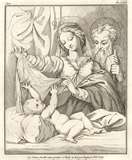
    During one of my trips to just such a place in Pennsylvania, I discovered a very old and worn copy of a painting of the Holy Family. The baby Jesus is resting in a wicker basket, his arms outstretched to Antiqueholyfamily Mary who is leaning over him, gazing upon him lovingly.


    Because we know Mary as the devoted mother she was, we know that this child who reaches out in trust will find a mother who responds in surrender to the need. But what would have happened if Mary had rejected Christ when he extended his arms to her or flew to her with some need?


    If she had at any time rejected him, would Jesus have had the powerful sense of self, sense of value, which enabled him to embrace his cross? Would he have possessed the strength to allow himself to be vulnerable or the courage to stay the course? Would he have loved with the fullness of Divine love? How would he have dealt with the powerful rejections in his adulthood, most especially the rejection of those he loved most, like Peter who denied even knowing him?


    Mother Teresa, who saw the face of rejection daily, wrote poignantly of the power of rejection to wound the human heart and soul: Hungry not only for bread – but hungry for love. Naked not only for clothing – but naked for human dignity and respect. Homeless not only for want of a room of bricks – but homeless because of rejection.”


    Mother Teresa was not an archaeologist per se, but, like so many in ministry, she spent her time unearthing the greatest of all treasures – the human person. For her, the divine child was often buried in a body covered by abscesses or so malnourished that they appeared as a skeleton with a mere painting of skin.


    Those who minister in a culture of abundance often find themselves digging away at layers of emotional wounds and the poverty of spirit that comes with feeling rejected and subsequently believing oneself unlovable. God often provides many opportunities to uncover the treasure that lies buried in so many human hearts. It is a joy to uncover such an ancient and divine gift, but it carries with it a great responsibility and the need for one special tool – love.


    How fortunate we are to have Mary, the great nurturer of Love, to show us how.


  • These cookies get rave reviews whenever I make them. Don’t remember where I got the recipe, but they’re super easy and just as delicious!


    Chocolate Chip Macaroons


    ¾ cup sweetened condensed milk


    3 cups shredded coconut


    1 teaspoon vanilla


    ¾ cups chocolate chips


    Preheat over to 350. Grease cookie sheet. Combine all ingredients. Stir well. Drop by teaspoons on cookie sheet about 1” apart. Bake 10 minutes or until golden brown. Makes about 3 dozen.

  • During the past 15 years I have written about dozens of topics on things my father taught me when I was growing up, and continues to teach me now that I am an adult. Recently, remembering the advice of a good friend who said many people appreciate bulleted lists for easy reading, I decided to create a list of two word phrases capturing the essence of the many lessons I learned from my dad. Since many publishers are interested in an author’s ideas for marketing, I considered that such short phrases would serve as great bumper stickers.

    Heading the list was the phrase "Do Good." I went to a great Internet site that I have used before, Dogoodproofwhere a customer can design their own bumper stickers, and within a few weeks I had a small supply of magnetic bumper stickers and the satisfaction of knowing I had created my own traveling work of art.

    A more challenging result is that I now also have a constant reminder on the back of my car to "Do Good," a print version of my conscience following me like shadow.

    So, with those two words prominent in my mind for the last month or so our pastor’s homily this past Sunday resonated strongly with me, reminding me of the many ways we either do good, or do harm, to the life of our parish. High at the top of that list is our willingness, or refusal, to build community.

    Community is essential to a people who professes belief in the Trinity; who profess belief in a savior born within the communion of love that is family. As individuals, and as a people, we were born to be in community; our Baptism makes us members of one Body of Christ, and every member of the community has a responsibility for the health of the Body.

    Community is nourished by something as ancient and ordinary as hospitality—a smile, a welcome, a pleasant voice on the phone, clean and orderly gathering places, personal presence during times of need, fellowship, and simple respect for people. But even the best attempt at hospitality is not enough to nurture healthy community if we are not truly walking the talk of our faith, especially those of us who are leaders in the Church, whether we lead in a parish, school, diocese, service organization, or simply in our families.

    Too often, when we accept the role of leader, our human inclination toward pride takes over and humility flies out the window. And there is nothing more damaging to community than arrogance because it pigeon-holes people into a hierarchy of importance, with "me" on top, and everyone else somewhere on the ladder going down.

    If we forget the "servant" part of servant leadership, putting what we want before all else, we erect obstacles to forming community, and have, ourselves, become obstacles to the sacramentality of the Church.

    In his book, The Apostles, Pope Benedict XVI writes about Peter, who serves as an example for all leaders, saying that Peter had strong expectations of what he wanted in terms of a powerful Messiah, and when Jesus presented himself as a servant of God who would dash Peter’s expectations to the ground, Peter responded with great arrogance. Pope Benedict writes, "Peter, implusive as he was, did not hesitate to take Jesus aside and rebuke him. Jesus’ answer demolished all his false expectations, calling him to conversion and to follow him. ‘Get behind me, Satan! For you are not on the side of God, but of men.’ It is not for you to show me the way; I take my own way and you should follow me. Peter thus learned what following Jesus truly mean."

    "Follow me." There is no advice more difficult, or more effective, for Christian leadership.

    My column, Things My Father Taught Me, appears in The Monitor, the official newspaper of the Diocese of Trenton, NJ; The Catholic Spirit, the official newspaper for the Diocese of Metuchen, NJ, and, on occasion, in The North Texas Catholic.