• This morning I read a thought-provoking blog from a well-known deacon in the Church who wrote about the challenges of Church and culture and the Emily-park-jGjBDv06hDw-unsplash

    interwoven nature of the two. He stressed that one of the reasons he was writing on this topic was because “the younger generation is watching.”

    That’s a scary prospect, when we consider what children are exposed to today and what becomes assimilated as acceptable behavior, and while we may understand it as behavior unworthy of our Catholic faith, our children are still in the process of “becoming,” and need effort invested on all sides in their moral and faith formation.

    That’s why the teaching of Catholic virtues is important in the religious education classroom.  Virtues are described in the Catechism of the Catholic Church as “a habitual and firm disposition to do good. It allows the person not only to perform good acts but to give the best of himself” (CCC, no. 1803). 

    Catholic teaching identifies seven virtues, including three theological virtues which serve as the foundation for four Cardinal virtues. The three theological virtues are faith, hope, and love (charity), and “the greatest of these is love.” They relate directly to God and are gifts of God we receive in Baptism. The four Cardinal virtues, which are considered human virtues, are prudence, justice, fortitude, and temperance.

    The language used in Catholic teaching to explain the virtues and their relationship to each other is sometimes daunting, such as in the Catechism of the Catholic Church, or writings of the Holy Fathers, but is worth tackling to help us, as religious educators, develop a fuller understanding of the simpler explanations in student texts. A greater understanding can only help us to be more effective in teaching students about the importance of virtues.

    I have found the United States Catholic Catechism for Adults to be very helpful.  It is an adaption of the Catechism of the Catholic Church developed by the United States Conference of Catholic Bishops. It relates Church teaching, as far as possible, to United States culture, affirming the positive elements and challenging the negative. Each chapter begins with a story of an American saint or other outstanding Catholic who belongs to a community of witnesses to the Catholic way of life, and also includes questions for discussion, meditation, and prayer.

    The USCCA points out, “From the earliest days of the Church when St. Athanasius wrote the life of St. Anthony of the Desert, it was clear that telling stories about saints and holy people encourages others to be like them and is an effective way of teaching Catholic doctrine.”

    That’s something easily done in a religion classroom and fits right in with one of the principal marketing practices for video games – community building. Let’s face it, given youth’s fascination with video games and anything screen-related, we are up against a formidable source of influence. We could take some lessons from their best practices for getting kids hooked.

    In addition to the lessons in teacher guides, how may we cultivate Catholic virtues in the classroom?

    Build Community – If sharing the lives of holy women and men with students provides them with models to emulate, evaluate how often you can manage it in the classroom. Additionally, these stories offer a consistent reminder that they, even as youth, are part of the communion of saints, comprised of all the members of the Church through all time including those now in the Church or those who have died and are either in Heaven or Purgatory. Remind students, visually as well as with words, that they belong to the family of God. 

    Create Saint Teams – As time and lesson plans allow, group students into teams under the name of a saint, maybe saints of a particular month or season. If old enough, have students work together to learn about their saint, discover the saint’s virtues and create a presentation on those virtues to share with the class. For younger students, use reading groups to read the story of a saint to the group and allow them to draw pictures about what they’ve heard and then talk as a group of the saint’s virtues.

    Visual Displays – Tapping into the reality that children are inundated with and attuned to visual communication, consider using the language and definition of virtues as they are presented in the student texts to create single-word posters to keep on display in the classroom, or have students create symbols to represent each of the virtues, keep them on display, or turn them into class books. 

    Pray for Virtues – Add to your classroom prayers an opportunity for students to ask God for an increase in the seven Catholic virtues, or additional human virtues such as patience, humility, mercy, and kindness. Asking God for help is an excellent practice to cultivate in students, helping to develop the virtue of humility and faith for their journey ahead.

     This post appears in RCL Benziger’s blog for Catholic school teachers and catechists, Faith Fuel, and includes posts on a variety of useful topics for and from educators.

    Mary Clifford Morrell, mother of six and grandmother to ten, is a Catholic journalist, editor, and author who has served the Dioceses of Metuchen and Trenton, New Jersey; Burlington, Vermont, and RENEW International in the areas of religious education and communication.

    Emily Park photo on Unsplash.

  • One of the things I love about spending time with my very young grandchildren is being privy to their moments of wonder. Chris-malinao-burgett-9RSHm0aP-sE-unsplash

    An amazing monsignor, who spent many years as a diocesan director of religious education, recently reminded me that “children are open to wonder, and we need to capitalize on that,” sharing that a friendship and relationship with Jesus, is among those moments of wonder, and is one of the mysteries that we can help them unfold as they grow.

    He stressed the importance of religious education programs to be attentive to children and young people, and to connect them to the sacramental aspects of our faith, with the Eucharist being top priority. Talk about a moment of wonder.

    More than 50 years ago, renowned conservationist, Rachel Carson, began work on an essay that would, after her death, become the best-selling book, “The Sense of Wonder: A Celebration of Nature for Parents and Children.”  In it she writes, “If a child is to keep alive his inborn sense of wonder… he needs the companionship of at least one adult who can share it, rediscovering with him the joy, excitement, and mystery of the world we live in.”

    While Rachel focused on nature, which in itself is a revelation of God, her thought is meaningful in the realm of religious faith, as well, where every child needs the companionship of at least one adult who can share the wonder of sacramental faith, with its joy, excitement and mystery.

    Being such a companion is the privilege of every Catholic school teacher and catechist. As we embark on the journey, there are several important things to do:

    Nurture your own sense of wonder – Remember the words of Scripture: “And a little child will lead them.” Rediscover your wonder by catching it from your students. Of course, this is easier when students are young because they begin to lose that sense as they approach puberty. If you teach middle or high school students, ask them what makes them wonder, and be prepared to share some of your own observations, as well.

    Step out of the noise – Give yourself the gift of quiet and use that time to reflect on what you see or hear or use that time for prayer. Noise is one of the greatest distractions to the spiritual life, for adults and children. Give your students that gift, as well, either in the classroom or the sacred space of the church or chapel.

    Find a spiritual director – Retreat centers and religious orders often have spiritual directors in residence. Your diocesan offices may also have a list of certified spiritual directors. As my monsignor friend reminded me, “It’s important we never stop growing in our faith.” As we grow, we come to embrace, or rediscover, the joy, excitement and mystery that we want to share with our young students, as they grow in their faith, as well.

    Mine your religious education textbooks – There is not only a wealth of information in all of the RCL Benziger religion curriculum texts, but a trove of suggestions, examples and tips for engaging students in the formation of their faith. Some of them will fit in perfectly as you tap into your students’ sense of religious wonder and deepen their relationship with God.

    This post appears on RCL Benziger's blog, Faith Fuel, for Catholic school teachers, catechists and parents. 

    Chris Malineo photo on Unsplash.

    About the Author
    Mary Clifford Morrell, mother of six and grandmother to 10, is a Catholic journalist, author, and syndicated columnist who has served the Dioceses of Metuchen and Trenton, New Jersey; Burlington, Vermont, and RENEW International in the areas of catechesis and communication.

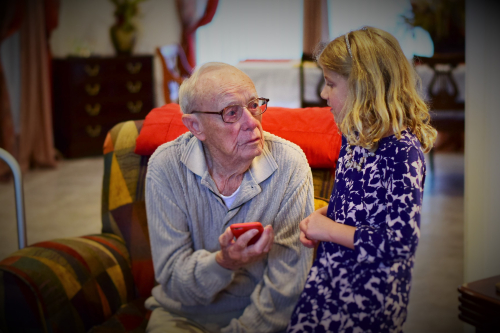
  • In light of the second annual World Day for Grandparents and the Elderly, established by Pope Francis in 2021 and observed on the third Sunday of Tim-kilby-x2qzLL3vdBs-unsplash July, I was asked to write an article on the unique experience of senior grief. I interviewed a psychologist and family counselor who serves in a grief support program, and a number of parish bereavement and consolation coordinators.

    Across the board, they identified loneliness as the most prevalent problem for seniors, and interestingly, not only following the loss of a loved one. Older family members, neighbors, or friends are often hampered in their ability to get from place to place. Many no longer drive, and those who do are often much more fearful of driving than when they were younger.

    In my family, I have one aunt left, my mother’s sister. She has lost all four of her siblings, her husband, a late-in-life male companion, most of the extended family of her generation, and a daughter – one of her five children. We recently lost my cousin, her niece, and my aunt was inconsolable at the wake. “I’m so tired of burying my family,” she cried. “I’ve lost so many, and I miss them so much.”

    As their spouses, friends and children die, seniors are left more and more alone and often cut off socially, unable to visit friends, join others for shopping or make it to Mass or parish programs. They become all the more aware of their own mortality. It can be frightening.

    The psychologist shared what she considered to be the most important gift we can give our seniors – to “provide support in the form of a listening ear and offer of ongoing social connection. Like anyone grieving, the elderly want to feel seen and heard.”

    Bereavement ministries also mentioned the problem for many seniors of not being tech savvy.  It often prevents them from staying on top of important responsibilities and programs, like banking, social security, Medicare, health insurance, or simply having the opportunity to connect with grandchildren in a way grandchildren respond to – like texting.

    In the remaining days of summer, before school takes off like a roller coaster, consider sharing your time and talent with the elders of your communities. Take a senior to lunch, provide that listening ear, or teach them to text or become familiar with a computer. Or take your children with you and let them do the tech teaching!

    It doesn’t take a lot to help older members of our families, parishes, or neighborhoods know they are seen and heard, and loved. A cup of tea, help around the house, a heat-and-eat meal or two, a box of their favorite treats, and an opportunity to share them with you.

    It’s also a commandment to “honor your mother and father,” which would necessarily include grandparents and, hopefully, those of advancing years.
    Pope Francis asks us to “Please, cherish the elderly!” It’s a beautiful lesson for our children and our students to learn, as well.

    What can we do now, as well as during the school year, to honor seniors and help them fight loneliness?

    Call them. A phone call is much more personal than a text and preferred by most seniors.  For those who live alone, hearing another’s voice at the end of the line is a gift and helps them feel more at ease knowing someone is checking in with them. “I’ve fallen and can’t get up!” is not just a commercial.

    Write them. There is something very special about receiving a letter in the mail. Seniors who are still capable are often happy to write back and share their stories. When a line of communication begins, it gives seniors something to look forward to and is often a bright spot in their day. Senior residential centers often have pen pal programs in place. You might want to check with one in your area and consider having students write to residents during the year, as well.

    Go for a walk.  Getting some sun and fresh air does wonders for the body. How and where you walk will be dependent on your senior’s physical condition, but even a short walk on level ground is something for them to look forward to. If walking is out of the question, a game of cards outdoors, engaging in a hobby, or putting together a puzzle on the porch in nice weather is a healthy choice for both of you.

    Say the Rosary together. If praying a Rosary is an important devotion for your senior, it will have even more meaning shared with you. Or pick a Mass which has the recitation of the Rosary following and go together. Coffee and a donut on the way home sound good, too.

    The value of being present to our elders is not in an elaborate plan but in the simple day-to-day activities they may be missing now because they are alone, or their physical or mental state has changed. At the heart of it all is a desire for company and the knowledge that someone cares about them.
     

    This post appears on RCL Benziger's blog for Catholic school teachers, catechists and parents Faith Fuel.

    About the Author
    Mary Clifford Morrell, mother of six and grandmother to nine, is a Catholic journalist, author, and syndicated columnist who has served the dioceses of Metuchen and Trenton, New Jersey, and RENEW International in the areas of catechesis and communication.

    Tim Kilby photo on Unsplash

  • One of our favorite summer dishes is ambrosia, a mixture of fruits, coconut flakes, mini marshmallows, cherries, and whipped topping. While the 77c20b5acfada4ed976e5792cf3d0595
    sugary additions diminish the healthy aspect, my sons will fight over the last bowl and have always agreed to the meaning of ambrosia as “nectar of the gods.”

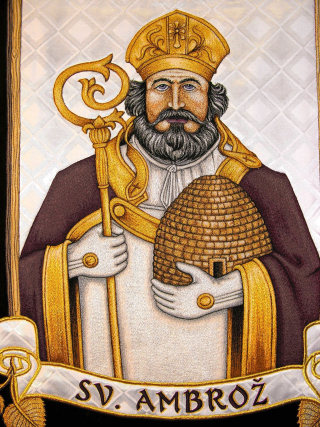
    I’ve recently discovered that ambrosia is also the term used for a mixture of pollen and nectar that worker bees feed to bee larvae and has an additional significance because Saint Ambrose is a patron of bees, beekeepers, and candlemakers.

    When Saint Ambrose was a baby, so the legend goes, a swarm of bees landed on his face, leaving a drop of honey before moving on to their hive. Saint Ambrose’s father was convinced that the honey was a symbol that his son would be blessed with a honeyed tongue, and as it turns out, he certainly was.

    Saint Ambrose was a prolific preacher, a doctor of the Church, and one of several saints who are connected with bees, beehives, and honey, all of which played a part in the early symbolism of the Church. Saint Ambrose saw the beehive, where there is a shared devotion, work and effort for the good of the colony, as a symbolic of the Church.

    Certainly, bees, particularly honeybees, have a number of admirable characteristics that can serve as a model for us as Catholics and as educators. So, what is it about bees?

    They are a symbol of strength and endurance – Given their aerodynamic deficiencies (chubbiness), honeybees are a marvel of flight. Bees have an incredible ability to carry more than 100 times their weight and can find their way back to the hive more than eight miles away carrying their weight in pollen. Any educator who has ever stood in a classroom understands the need for these characteristics for Catholic school teachers.

    They act as communicators – Good communication is essential to the survival and productivity of the hive, just as it is in the world of educators. Bees communicate by releasing strong-smelling pheromones, carrying the scent of flowers back to the hive so other workers can find food sources, and though dancing. Fortunately, teachers don’t have to dance to communicate, though it could be the highlight of the year for students Jenna-lee-f0OL01IHbCM-unsplash.

    They are collaborators – Bees are hustlers, but they don’t hustle for themselves; they hustle for the hive. Catholic school teachers are also part of a larger body, working together for a common cause – to form disciples of Christ who are confident students, who are thinkers and doers, and who value the end result of learning.

    The fruit of their efforts is sustenance – Bees create honey for the life of the bees in their hive, and fortunately for us, they make more than they

    can eat, so we benefit from their efforts. Honey is not only a food but has healing properties, as well. Similarly, Catholic school teachers feed the mind and spirit of their students, who ultimately go out into the world and, hopefully, work for its good.

    This year, consider adding a bee or two to your classroom decorations. They may inspire a conversation about the power of bee characteristics and the role students have as stewards of the earth.

    Also, if you use a candle for private prayer or meditation as I do, consider making it a beeswax candle for the beginning of a new school year and reflect on this little reminder from St. Augustine: “All of you who stand fast in the Lord are a holy seed, a new colony of bees.”

    This blog post appears on RCL Benziger's blog, Faith Fuel, for Catholic school teachers, catechists, parents and anyone with a spiritual interest. 

    About the Author
    Mary Clifford Morrell, mother of six and grandmother to nine, is a Catholic journalist, author, and syndicated columnist who has served the dioceses of Metuchen and Trenton, New Jersey; Burlington, Vermont, and RENEW International in the areas of catechesis and communication.

    Jenna Lee bee photo on Unsplash.

  • All of my children were raised Catholic, went to Sunday Mass, received all their Sacraments, and were educated from K-12 in Catholic schools. And Vince-fleming-DIXhw2B6Bjo-unsplash (1)
    yet, when a crisis arises in their lives, they call me for prayer.

    Now, with families of their own, I’m not sure why they are reticent to pray. I feel like somewhere, somehow, along the way, culture has influenced them that prayer is ineffectual and so not something to bother with. Prayers have taken on the cultural value of superstition and platitude.

    How often do we hear now, in the shadow of some unthinkable tragedy, “We don’t want your thoughts and prayers,” making it clear that many believe prayers won’t change things, won’t fix what’s happened, or make it better?

    In some ways, it is easy to understand the frustration of those who are looking for answers to tragedy and looking for changes that will prevent tragedy in the future. We all know that prayers are not always answered the way we hoped for, and the natural result is disappointment and discouragement.

    But it is important to understand that the purpose of prayer is not just to have our prayers answered when we want something. Prayer is meant first and foremost to nurture our relationship with God, to be in frequent conversation with God who loves us, and to help keep our hearts and minds open to God’s voice.

    Prayer also builds our humility, which is not a weakness but a recognition that we are not God. We do not have all the answers, nor can we ensure that tragedies and losses will not happen. Part of that humility is the recognition that there are many times when we need to ask for forgiveness. Prayer is a means to that honesty before God.

    Pope Francis says, “Praying is opening the door to the Lord so that he can do something. If we close the door, God can do nothing,” By doing something, the Holy Father is not just referring to God giving us that for which we ask, but in providing guidance in making decisions, moving us along the right path, inspiring us with hope and strength in overcoming obstacles, and forming us in faith.

    As the summer moves along, there are several steps we can take to improve our prayer lives and help our students to do the same when school resumes.

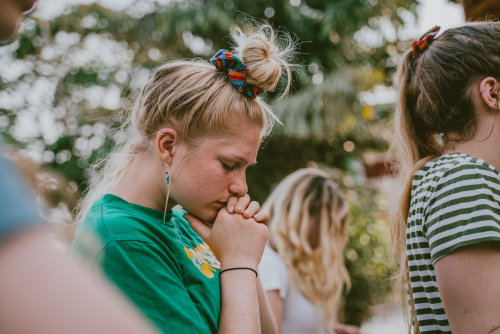
    Ask God for help in praying.  Follow in the footsteps of the Apostle who reached out to Jesus and said, “Lord, teach us to pray just as John taught his disciples” (Luke 11:1). We can ask God to not only teach us to pray, but to inspire us through the Holy Spirit to pray because sometimes getting started is the hardest step to take. 

    Pray the name of Jesus. In one of my jobs, my office mate was a nun who prayed throughout the day by saying, “Jesus, help me.” Often it was in relation to computer problems, but she prayed those words so frequently it became like breathing, and I’ve never met a person more at peace. Saint Philip Neri taught, “The name of Jesus, pronounced with reverence and affection, has a kind of power to soften the heart.”

    Pray continually. Well, that sounds like an impossible task, but it doesn’t mean sitting in your room or the church pew all day and offering prayers to God. Saint John Chrysostom preached that prayer is a state of mind and should serve as the foundation of our daily lives, taking place “even while walking in public or strolling alone, or seated in your shop, while buying or selling, or even while cooking.” 

    Pray for others. A close family member often posts on Facebook, “I don’t do thoughts and prayers, but send me some positive energy.” Recently, she developed Covid. I messaged her on Facebook, saying, “I know you don’t do thoughts and prayers, but I do, so I’m praying every day for your recovery.” Pope Francis said, “The first way to pray for someone is to speak to God about that person. If we do this frequently, each day, our hearts are not closed but open to others. Praying for other people is the first way to love them and be close to them in a concrete way.” And it’s a wonderful prayer practice for children.

    In one of his many teachings on prayer, Pope Francis shared a beautiful thought that has stayed with me as a choral singer: “Prayer is a kind of musical staff, where we arrange the melody of our lives. It is not in contrast with daily work; it does not contradict the many small obligations and appointments; if anything, it is the place where every action finds its meaning, it is reason and it is peace.”

    This blog post appears on RCL Benziger's blog for Catholic educators and catechists, Faith Fuel.

    About the Author
    Mary Clifford Morrell, mother of six and grandmother to nine, is a Catholic journalist, author, and syndicated columnist who has served the Dioceses of Metuchen and Trenton, New Jersey; Burlington, Vermont, and RENEW International in the areas of catechesis and communication.

  • Years ago, during counseling for depression, my therapist brought up the topic of letting go.  I was having trouble considering the possibility of leaving Elia-pellegrini-TKI53qncsXc-unsplash my home where all my sons had been born and raised and in which the entirety of my married life had been spent.

    I was balking, so being a woman of profound spiritual depth, she phrased the problem as one of attachment. “Have you forgotten that detachment and surrender are necessary for the spiritual life?” she asked.

    Of course, I knew, but it wasn’t something my heavy heart or muddled brain was ready to consider. But the question hit home and hung in my mind for weeks that turned into months until I was ready to enter into the spiritual process of letting go.

    As with all things, the first step was acknowledging there was a need.  Once I did, examples of attachment and letting go seemed to jump off the pages of daily life, like the sparrow near our porch who tried repeatedly to carry nesting material too wide for navigation. I found myself whispering, “Just let it go,” which she eventually did, now free to fly and find a more manageable piece.

    Or watching my granddaughter climb a rock wall. “If she lets go, she will fall,” I thought, followed by, “But if her hands were clasped around other things, she couldn’t open them to hold on or move forward.”

    Or the friend, clinging so tightly to anger for years because of a loved one’s death, he lost his faith in God and all joy in a life that still held innumerable blessings. It wasn’t that he couldn’t surrender, it was that he didn’t want to. He was choosing to live in the pain, day after day, year after year, and it was making him sick.

    Surrender does not have a positive connotation in our society. It is a word for giving up, for defeat, the result of weakness. I prefer to think of it as release. When we release all that is not to our benefit, it is a gift and a grace for our spiritual, physical and emotional lives.

    As I slowly began the process of letting go, first of stuff easily tossed in the trash and then of things that had real meaning for me, I began to understand the emotional attachment that results in so much unnecessary clutter. Much of what I was holding on to were things that meant so much to my parents and became mine when they died. I limited myself to giving them to others who wanted them, but found it almost impossible to throw anything away, as if it were an act of disrespect.

    I learned to hold each object, offer a prayer of gratitude to God for my parents and the belongings they enjoyed in life, and then put each item in a box to donate or throw away. I’m still working at it.

    The difficult next step was to acknowledge and release painful experiences from my past, the hurts, the losses, doubts and perceived failures. It never meant forgetting, it simply meant untying them from my head and my heart so they would lose their control.

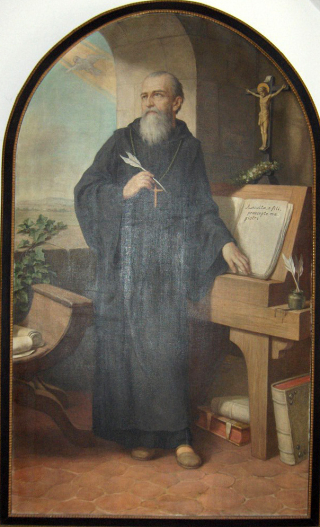
    In the process I realized you cannot hold on to God when your hands (or your heart or mind) are full of your own stuff. Our hands must be empty and open. By surrendering we let God take control of our lives and deprive the entire litany of obstacles to our peace from dictating our days or the rest of our journey.                                                                                                                                                                                                                                                        Heiligenkreuz.St._Benedict

    In a beautiful, contemporary interpretation of the Rule of St. Benedict, titled with the saint’s words – Always We Begin Again – John McQuiston II includes a verse that, for me, unfolds the purpose and fruits of surrender:

    “Life will always provide matters for concern.

    Each day, however, brings with it reasons for joy.

    Every day carries the potential

    to bring the experience of heaven.

    Have the courage to expect good from it.

    Be gentle with this life,

    and use the light of life to live fully in your time.”


    Elia Pellegrini photo on Unsplash

    St. Benedict writing the rule. Hermann Nigg (1849-1928)


  • Anthony-bernardo-rodriguezI have no doubt that teachers often find themselves in a similar situation as parents when dealing with children – talking and no one is listening. 

    “I may as well be talking to the lizard,” my daughter-in-law is sometimes heard to say.

    She is in good company, not only with teachers but with the saints. Particularly, St. Anthony of Padua, who gave up a life of wealth and power to serve God as an Augustinian (until he became a Franciscan).

    This much-loved saint and doctor of the Church never set out to be a preacher, but God had plans for him so preach he did, often to heretics.

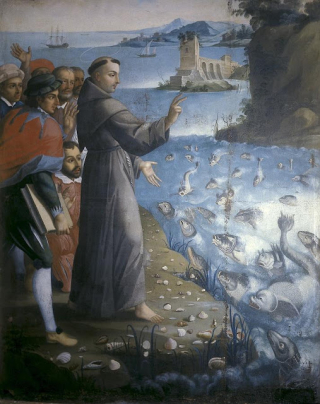
    On one occasion, after several days of preaching the Gospel, St. Anthony became frustrated with those who refused to listen. So, he took himself off to a place where the river emptied into the sea and began to preach to the fish, who proved to be a much more willing audience.

    Legend says that the fish came to listen to St. Anthony in multitudes, with their heads out of the water and seeming to look intently at the saint. When the people in town heard about the miracle, they all came to witness it, including the heretics who refused to listen the first time. Many were converted.

    St. Anthony had success in his preaching because he learned over many years the value of being open to God and the power of the Holy Spirit. Preaching had been a hidden talent that he only discovered when circumstances brought him to a time and place when he was asked to “say a few words.” 

    No one expected much of St. Anthony in this regard, as he lived a quiet, prayerful, simple life away from the limelight. But when God brought him to it, he opened his mouth, and holiness and profound wisdom flowed out.

    Our children also have hidden talents, and as adults in their lives, we have the exceptional privilege of helping them discover the gifts God has given them. Discovering these gifts means finding their passion which will be a source of joy and satisfaction for them as adults.

    With limited time in a classroom, what is the best way to go about it? 

    Be an encourager – Encourage curiosity. Throughout the school day, children will have an opportunity to participate in a variety of activities and tackle a variety of subjects. In these moments children may discover a new interest or talent. But sometimes, children are reticent to try unfamiliar activities or subjects. Some of this stems from a fear of failure. Helping children understand the value of failure as a stepping stone to success is a crucial milestone for keeping them engaged. 

    Be a listener – Children love to talk about the things that interest them. Pay attention. What keeps them engaged? Who are their heroes, and who do they admire? Encourage them to talk about why they admire those people. What character traits do they exhibit? Do they resemble the Gifts of the Holy Spirit – Wisdom, knowledge, understanding, counsel, fortitude, courage, awe? 

    Discuss the saints – The saints, all unique and differently gifted, are perfect examples of the many varied gifts and talents God gives to each of us. Choose a few who appear in your Blest Are We or Be My Disciples curriculum. Use the free RCL Benziger Saints Resource for more information on a particular saint, like Saint Anthony of Padua.

    Thank God in prayer – Provide an opportunity for children to thank God for their many gifts, even if they have not yet discovered them all. Encourage them to give thanks for the gifts of others, as well, and remind them of Psalm 139:13-14: “You formed my inmost being; you knit me in my mother’s womb. I praise you because I am wonderfully made; wonderful are your works!”


    This post appears on the RCL Benziger blog, Faith Fuel — designed for Catholic school teachers and catechists of children and youth.

    The image is a painting attributed to Bernardo Rodriquez, circa 1800. Corrections welcomed.

  • Robert Frost, a renowned American poet, was also a teacher, so he knew what he was talking about when he said, "I am not a teacher, but an Toa-heftiba-edJPD9XlNpo-unsplash awakener."

    As an awakener, teachers enable students to learn information and develop critical thinking skills, hone insights, become courageous learners who are not afraid to fail, and grow spiritually and emotionally.

    When it comes to faith formation, it's essential for teachers, who are also spiritual leaders, to have what they want to see developing in their students – a growing relationship with God in an environment that encourages children to seek God and respond to God's grace.

    That's a lot for one person to bring to students year after year and can best happen when teachers have time to support each other as colleagues and spiritual companions on a journey. It's not only an aid to better teaching. More importantly, it is a gift to a teacher's spiritual life.

    Unfortunately, with the educational system being what it is in the United States, there is often limited time for teachers to come together, share ideas or pray together. 

    Enter summer. For those teachers who don't have to make daily trips to the classroom, the summer provides an opportunity to plan a few informal gatherings of teachers at someone's home or lunch at a restaurant that would allow for conversation. 

    Spending time with spiritual companions is meant to feed the teacher's soul and mind, not just create a better lesson plan. It's time to relax, breathe, and find joy in your chosen ministry.

    Remember the words of St. Paul to the Corinthian community: "As a body is one though it has many parts, and all the parts of the body, though many, are one body, so also Christ."

    Catholic school teachers are part of one body, the body of Christ and the school community they serve. And yet, each has different spiritual gifts to be shared. Even a summer gathering of two or more is worth the time.

    During your gatherings:

    Take time to talk about the art of teaching, not just the mechanics. Share stories of working with individual students, what made a difference and what didn't, and share questions about faith, including doubts that may impact your sincerity when teaching the faith.

    Talk about God. Share your understanding of God's nature, God's love, and God's plans for each person. How are we different? How are we alike? How does God make it possible for us to do what we do?

    Listen to others' ideas about God without judgment or trying to change their minds. You may come face-to-face with the grief or loss of others which has impacted their feelings about God. Listen well.

    Keep your time together as positive as possible. Do not spend this time criticizing teachers who came before you. Blaming is not a tool for growth. 

    Pray for each other. Jesus prayed for the Apostles, his spiritual companions on his earthly journey. Follow his example. 

    Read Scripture. The Bible is a continuing source of learning and grace for teachers and students alike.

    This post appears on RCL Benziger's blog, Faith Fuel, for Catholic school teachers and catechist. Lots of tips and ideas for year-round teaching. Check it out.

    Toa Heftiba photo on Unsplash.

  • Who would have thought that American icon Bob Ross, a non-imposing, encouraging television artist and TV host popular in the 80s, would be Rhondak-native-florida-folk-artist-_Yc7OtfFn-0-unsplash trending in 2022? 

    As youngsters, my older sons sat mesmerized watching “The Joy of Painting” as Bob took his brushes to a canvas and, in half an hour, had created an
    amazing landscape scene. Most importantly, his faith in the ability of viewers to do the same and his unique way of engaging both his work of art and his audience in the conversation has made him the most popular artist of the 20th century.

    Who doesn’t remember, “Let’s add some happy little trees,” or his encouragement that there are no mistakes in painting, “just happy little accidents.”

    Though Bob died in 1995, he has been called an “avatar of edgeless culture,” a soothing, non-judgmental presence in a polarized, rapidly changing world. His television show was a give and take between Bob and his audience, who were essentially students immersed in the mindfulness of creativity. They were being given an opportunity to explore possibilities, find the lessons in mistakes, and think innovatively.

    His positive influence, writes one author, can be seen in the uniquely positive comments under Bob’s YouTube videos which garner millions of views. One post read, “If art teachers were all like Ross, no one would fail, no one would feel ashamed to show their work, no one would dread to come to art class. He is so inspiring!”  

    Creativity is an essential ability that enables us to thrive and adapt in a rapidly changing world. Creativity is at the epicenter of human exploration and discovery, an ability used to generate and communicate original ideas of value. Developmental psychologist, Marilyn Price-Mitchell, notes there is a “significant connection between creativity, meaning, and intrinsic motivation. 

    “Inspired by our senses of sight, sound, taste, touch, and smell, creativity is a force that nurtures human development, innovation, and an aesthetic appreciation of the world around us.”

    So, how can we teach creativity as a way of thinking in the religious classroom?

    Examine creativity – Expand your understanding of creativity from the act of creating something, like art or music, to a broader definition of making connections between unrelated ideas. Helping children understand or write parables is a good exercise. During the summer months, do some research on this subject of creative thinking, which is recognized as essential for the success of today’s students and teachers.

    Encourage creative mindsets – Creative thinkers are both self-disciplined and risk-takers. Provide opportunities for children to learn the value of both. Help children come to an understanding of the results of decision-making, so essential in the life of our Catholic faith. Pose the possible questions: What would happen if…?

    Offer collaborative learning – Giving children the opportunity to brainstorm or share their thoughts with other children is a powerful tool to foster creative thinking. It helps develop mutual respect between students, improves dialogue, and demonstrates teachers’ faith in student-centered learning. Depending on their age, set up real-world problems and allow them an opportunity to develop solutions together. Let them discover how faith may change the world for the better.

    Make time for planning – Incorporating creative thinking into the classroom and curriculum requires planning. Even Bob Ross, who made painting look like second nature, had a finished version of each episode’s painting just beyond the camera to use as a guide. Reviewing your RCL Benziger teacher guides or any number of additional RCL Benziger resources will prepare you for creative teaching before we are “back to school.”


    This blog post appears on RCL Benziger's blog for Catholic educators and catechists, Faith Fuel.

    RhondaK Native Florida Folk Artist photo on Unsplash.

  • Last week, as I made plans to attend yet another wake for a beloved family member, I did what most of us do in times like this. I remembered what Sandy-millar-cQ-66Evaf5g-unsplash was. I remembered times spent together, celebrations, hardships and simple quiet moments shared. I remembered her unique smile, her indomitable spirit and her joy in life and in others.

    After any death, the meeting of friends and family at the funeral parlor, the familiar routine of the wake service, the meaningful rituals of the Mass, and the images and symbols of the cemetery are certain to evoke memories of loved ones lost and grief experienced. For me, at that moment, the newest loss brought to mind the burial of my very dear uncle many years ago, someone much loved and cherished, and still missed.

    That morning, as we stood silently by the grave side, waiting for the priest to begin the last prayers, I noticed a small child toying with the baskets of flowers that led to the canvas tent. The bright pink and purples of her dainty clothes were in stark contrast to the somber hues of the adults nearby. In a world of her own, as if unaware of the soft drizzle of fall rain or what was taking place around her, she hummed a quiet tune and touched the silken pedals of fresh cut roses.

    Though my heart ached at the painful thought of my uncle being laid to rest, I had to smile at the little girl who reminded me that life goes on. Then I was the grieving niece and the anguished daughter, having recently lost both parents. At some tomorrow I will be the deceased, as will we all.

    While death, for most of us, is a thought we try to push aside and a fate we try to avoid as long as possible, it is not a bad thing to live life with an awareness that our days are numbered. It is a powerful reminder to live and love fully.

    It is a reminder I feel most powerfully during the funeral liturgy, a time to be nourished by the beauty and hope found in the Mass. There is, in this gathering of grieving souls, a shared experience, not only of sorrow for the one who has died but of both past losses and future promises of new life.

    The richness of the Mass seems a fitting memorial for the life of God’s own and gives those who are left behind the chance to commend their loved one to God in an act of love and dignity.

    As the prayers concluded the morning of my uncle’s funeral so many years ago, I followed the young child’s lead and pulled several sweet-smelling flowers from the baskets, walking timidly around neighboring graves, trying to undo the familiar tightening in my throat as I came upon the graves of my parents.

    Never did I imagine that just a few weeks ago I would be back, graveside, as my dear cousin, a sister to me growing up, was laid to rest next to my parents. Still, as we once again pulled flowers from the baskets and placed them on the headstones of the many, many family members buried there we talked about our loved ones, we cried and we laughed. We joked that since we “owned” such a large part of the cemetery, we could plan a family picnic when the weather got warmer.

    Remembering our losses is so often painful, especially when we are alone, but shared with people who knew our loved ones or who love us in our pain, it can be powerfully healing.

    Sandy Millar photo on Unsplash.